
How To
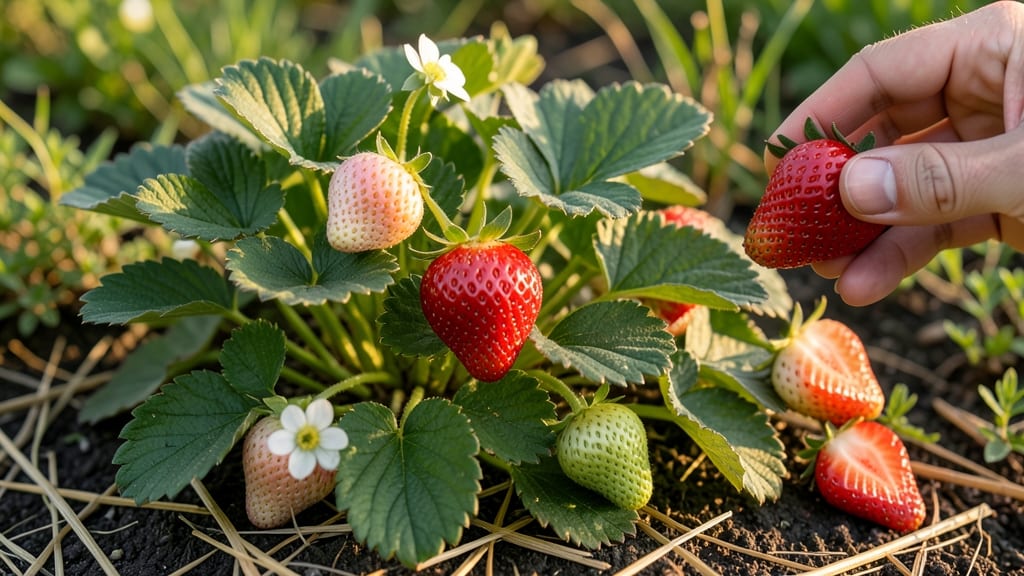
How to know when a strawberry is ripe can transform your garden harvest from ordinary to extraordinary—skipping this step means missing out on the sweetest, juiciest berries. 🍓 With just a quick glance and gentle touch, you can tell if a strawberry is ready to pick, saving you from the disappointment of underripe or overripe fruit.
The key lies in three simple checks: color, texture, and how easily it detaches from the plant. A ripe strawberry should be a deep, even red (or the specific hue of your variety), with a slight softness when pressed—not mushy or hard.
If it pulls away with just a little tug, it’s ready to enjoy.
I’ll walk you through these easy-to-spot signs so you never pick a strawberry too soon or too late again. Whether you’re a first-time gardener or a seasoned grower, these tricks will help you harvest at peak flavor every time.
No more guessing—just simple, foolproof ways to ensure your strawberries taste like summer should. Let’s get started!


3 Visual signs a strawberry is ripe (and when to skip it)
Nothing beats the taste of a homegrown strawberry plucked at peak ripeness. But how do you know when that perfectly ripe moment arrives? The answer lies in three key visual cues: color, shape, and surface texture.
Let’s break down what to look for—and what to avoid—when scanning your strawberry patch.
First, color consistency is your best friend. A ripe strawberry should be a uniform deep red all the way through (or the appropriate color for your variety, like golden yellow for 'Golden Queen'). If you see green or white patches, the berry needs more time on the vine.
Some gardeners make the mistake of picking strawberries just because they’re red on top, but the underside often tells the real story.
Next, pay attention to the shape and size of the berry. Ripe strawberries are typically 1–2 inches wide and plump, not shriveled or misshapen. If the berry feels smaller than a golf ball, it’s likely underripe.
Overripe strawberries, on the other hand, may start to shrink or develop mold, especially around the green cap.
Finally, check the surface texture. A ripe strawberry’s skin should feel slightly glossy and smooth, not dull or wrinkled. Tiny specks of white powder (called bloom) are normal, but a fuzzy or slimy texture means the berry is past its prime.
These visual clues work together to give you a foolproof way to spot ripe strawberries every time.
| Sign | Ripe Strawberry | Unripe Strawberry | Overripe Strawberry |
|---|---|---|---|
| Color | Uniform deep red (or variety-specific color) | Green or white patches | Dull red with gray or mold |
| Size | 1–2 inches wide, plump | Smaller than 1 inch, shrunken | Shriveled or soft |
| Texture | Smooth, slightly glossy | Dull, firm skin | Wrinkled, slimy or fuzzy |
| Cap | Green cap detaches easily | Cap stays attached tightly | Cap may rot or mold |
Don’t forget to smell the strawberry! A ripe one will release a sweet, fragrant aroma near the stem. If it smells bland or fermented, it’s either unripe or overripe.
This scent test is especially useful for heritage varieties like 'Albion' or 'Seascape', which may not turn fully red but still ripen fully.
One common mistake is assuming size alone determines ripeness. A strawberry can be large but hard or small but sweet. Always combine size with color and texture for the most accurate judgment.
For example, 'Chandler' strawberries often stay slightly firm even when ripe, so rely more on their deep red hue than firmness.
Pro tip: Harvest in the morning when temperatures are cooler. This helps preserve the flavor and texture of your strawberries. Store them in the fridge for up to 3 days if you can’t eat them all at once—but eat them as soon as possible for the best taste!
Now that you know what to look for, grab a basket and start picking those perfectly ripe strawberries like a pro. Your taste buds will thank you!
The touch test: how firmness reveals strawberry ripeness
Strawberries aren’t just about color—their firmness is your secret weapon for peak ripeness. A ripe strawberry should yield slightly when pressed, like a ripe tomato, but never feel mushy or squishy. This gentle give means the sugars have fully developed without overripening.
To test, gently squeeze the berry between your thumb and forefinger. If it feels too firm, it’s underripe and needs more time on the plant.
If it’s too soft, it’s past its prime and may spoil quickly. The ideal slight resistance is your sweet spot for flavor and texture.
🌱
Timing matters too! Harvest strawberries early morning when temperatures are cooler. This preserves their firmness and prevents bruising during transport. If you’re picking for a market or long storage, opt for berries that are 90% ripe—they’ll finish ripening off the plant.
For ever-bearing varieties, like 'Albion' or 'Seascape', the touch test is even more critical. These plants produce fruit in multiple flushes, and each wave requires precise timing.
A slightly firmer berry from an early flush might still be perfect, while a late-season berry needs that signature gentle give.
If you’re unsure, try the twist test: Gently twist the berry at its stem. A ripe strawberry will detach cleanly without tearing the fruit. If it resists or pulls away with the stem, it’s not ready yet. This method also protects the plant from damage.
🌿