
Tools
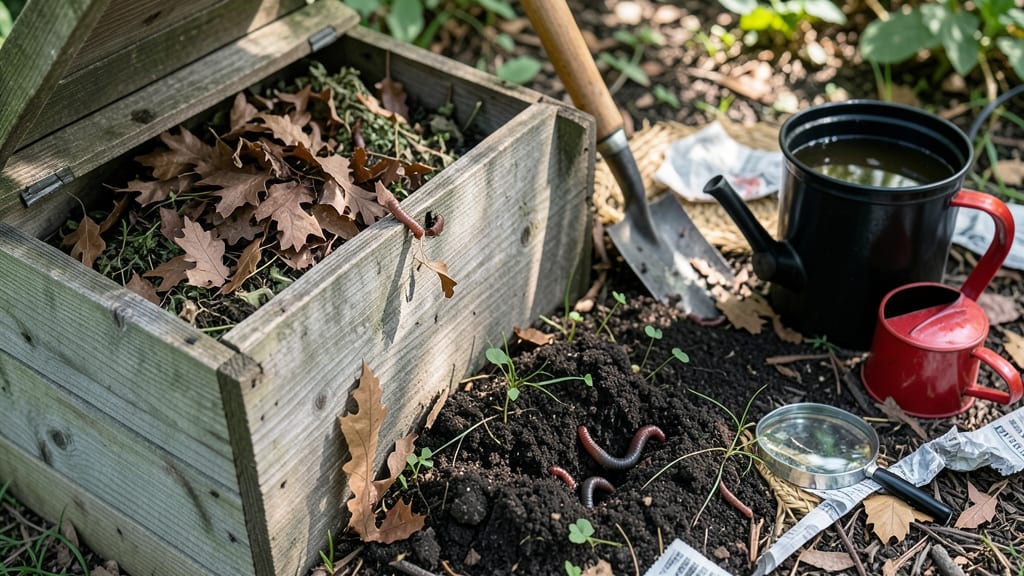
Attracting earthworms to your garden starts with creating moist, nutrient-rich soil with organic matter, balanced pH (6-7), and shaded areas. Avoid disturbing the soil through tilling, apply mulch regularly, and plant cover crops like clover or alfalfa to encourage their natural migration and reproduction.
Earthworms are nature's garden helpers, and their presence boosts soil health by aerating it and breaking down organic material. 🌱 The key is mimicking their natural habitat—think of a forest floor with leaf litter and decaying plant matter.
I've found that adding composted leaves or grass clippings creates the perfect microclimate, while avoiding synthetic chemicals keeps them safe. These creatures prefer cooler, damp conditions, so watering deeply in the morning helps maintain ideal moisture without making the soil waterlogged.
Another game-changer is cover cropping—plants like winter rye or vetch protect the soil from erosion while providing food for earthworms. Over time, this builds a thriving ecosystem where worms multiply naturally. The best part? Once established, they'll keep your soil fertile with minimal effort from you.
💡 In This Article
- Optimal Soil Conditions for Earthworm Activity
- Practical Techniques to Encourage Earthworm Migration
Optimal soil conditions for earthworm activity
Earthworms thrive because they're essentially soil engineers, and their survival depends on a delicate balance of physical and chemical conditions. Their bodies lack specialized respiratory systems, so they rely on the soil's moisture and oxygen content to breathe through their skin.
Ideal moisture levels hover around 20-30% by weight—think of a wrung-out sponge—where the soil feels damp but not soggy. Too dry, and they dehydrate; too wet, and they suffocate from lack of oxygen in waterlogged pores.
This is why morning watering works best: it allows excess moisture to evaporate during the day while keeping the soil hydrated overnight.
Their diet consists primarily of decomposed organic matter, which is why soil rich in humus (partially decomposed plant material) is their preferred habitat.
Microorganisms in this organic matter create a symbiotic relationship—earthworms ingest these microbes along with soil particles, breaking down the matter further while their castings enrich the soil with nutrients like nitrogen, phosphorus, and potassium.
The pH balance matters too: earthworms favor moderately acidic to neutral soil (pH 6-7), where microbial activity thrives. In alkaline soils (pH >7.5), essential nutrients like iron and manganese become less available, stunting their growth.
Aeration is another critical factor, as earthworms need well-oxygenated soil to survive. Their burrowing activity naturally aerates the soil, but compacted or heavily tilled soil disrupts their tunnels and reduces oxygen flow.
This is why no-till gardening is a game-changer—it preserves their burrow systems while allowing roots to access deeper moisture.
The texture of the soil also plays a role: loamy soils (a mix of sand, silt, and clay) provide the perfect balance of drainage and water retention, while pure clay or sandy soils can be too dense or too loose for their needs.
Temperature is often overlooked but equally important. Earthworms are ectothermic, meaning their body temperature matches the soil's temperature. They become sluggish below 50°F and may die in prolonged cold or heat extremes above 90°F.
This is why mulching with organic materials like wood chips or straw helps regulate soil temperature—it insulates the soil during heatwaves and retains warmth in cooler months.
Shade from plants or structures also prevents the soil from drying out too quickly, creating a stable microclimate that mimics their natural forest-floor habitat.
One fascinating aspect is how earthworms interact with microbial communities. Their digestive systems house beneficial bacteria that help break down complex organic compounds, while their castings introduce these microbes back into the soil.
This creates a feedback loop where microbial activity increases, further enriching the soil and making it more hospitable for earthworms.
For example, a single earthworm can process up to half its body weight in soil per day, turning it into nutrient-rich castings that improve plant growth by up to 50% in some cases. 🌱
To test if your soil is earthworm-friendly, dig a small hole (about 6-8 inches deep) and observe the texture, moisture, and presence of organic matter. If the soil crumbles easily, holds moisture without being soggy, and contains visible decomposed plant material, you're on the right track.
If it feels compacted or lacks organic content, amendments like compost or leaf mold can help recreate their ideal environment. The goal is to create a self-sustaining ecosystem where earthworms can thrive year-round.