
Flowers
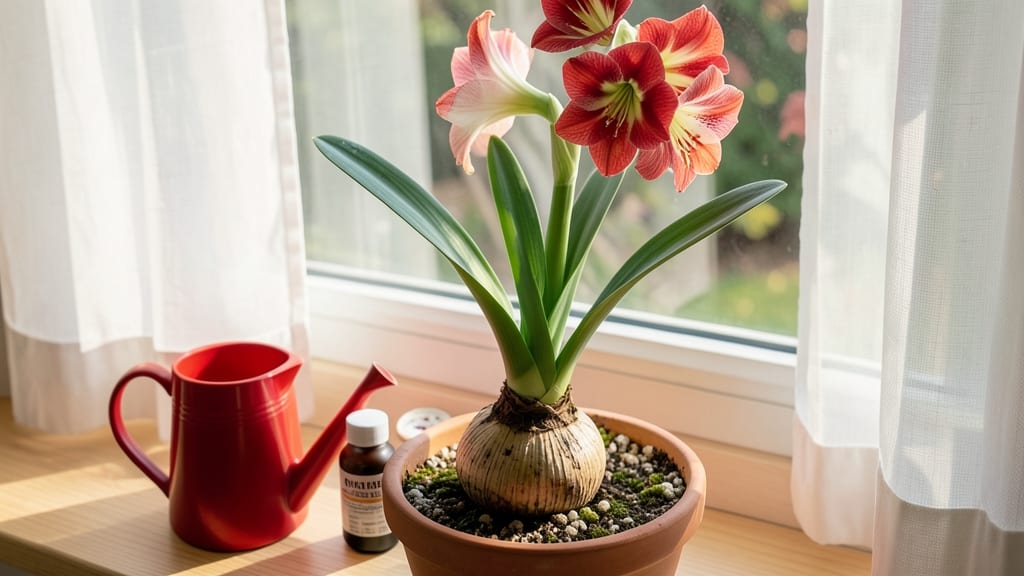
Caring for amaryllis flowers feels like having a drama-free diva in your home. 🌸 These bold beauties thrive with surprisingly little fuss—just the right balance of light, water, and patience.
My first amaryllis bloomed for weeks after I ignored every "expert" tip about soil and fertilizer, proving they're far more forgiving than most plants. The secret lies in their three-phase life cycle: dormant bulbs, active growth, and blooming.
You’ll need bright indirect light, well-draining soil, and a 60-70°F temperature range year-round. Overwatering kills them faster than anything else—let the top inch of soil dry before watering again, and always use a pot with drainage holes. By summer, you’ll be rewarded with stunning 6-inch blooms that last for weeks.
The key to repeat performances? Let the foliage die back naturally after blooming, then reduce watering until new growth appears. Even my blackest thumb can’t kill these if I follow these simple rules.
Outdoor growers get extra drama—plant bulbs in well-draining garden beds after the last frost, but bring them indoors before winter. Indoor plants? Just rotate them weekly for even growth. Here’s how to keep them thriving all year.
📚 In This Guide
- What you need
- Instructions
- Tips and common mistakes
- Wrapping up and next steps
What you need
- ● 1-2 amaryllis bulbs – Choose healthy, firm bulbs (size 5-6 inches in diameter for best blooms).
- ● Well-draining potting mix – A blend of peat moss, perlite, and sand (or a cactus/succulent mix). 1 gallon per bulb is ideal.
- ● 6-8 inch pot – Ensure it has drainage holes (terracotta or ceramic works best).
- ● Pebbles or gravel – For a 1-inch drainage layer at the pot’s bottom.
- ● Balanced liquid fertilizer – 10-10-10 or 20-20-20 NPK ratio (diluted to half-strength).
- ● Watering can with a narrow spout – To avoid over-saturating the soil.
- ● Bright, indirect light source – A sunny windowsill or grow lights (12-14 hours/day).
- ● Decorative pot or cachepot – For a stylish outer shell (ensure it doesn’t trap moisture).
- ● Humidity tray or pebble tray – If your home has dry air (especially in winter).
- ● Bulb food or slow-release fertilizer – For a 3-4 month nutrient boost.
- ● Pruning shears – To trim dead foliage or spent blooms cleanly.
- ● Spray bottle – For occasional misting (if humidity is low).
Step-by-step instructions for caring for amaryllis flowers
Here's the simple routine that keeps amaryllis blooming reliably year after year.
🌱 Step 1: Position for Bright, Indirect Light
Amaryllis thrive in bright, indirect light—think east-facing windows or 6 hours of filtered sun daily. Direct midday sun scorches leaves, while dim corners cause weak stems and sparse blooms. You'll know the light is right when leaves stay deep green and stems grow sturdy rather than stretching.
Rotate the pot quarter turn weekly so all sides get even exposure. If leaves yellow at the tips, the air is too dry—group plants together or place a pebble tray nearby. Avoid cold drafts, which stall growth completely.
💧 Step 2: Water Only When Soil Dries Completely
Water amaryllis only when the top 2-3 inches of soil feel dry to touch—overwatering causes bulb rot. Stick your finger in: if it comes out clean, wait another day. During active growth (spring-fall), water more frequently; in winter dormancy, reduce to once every 3-4 weeks.
Use room-temperature water and pour slowly until it drains freely from the bottom. Empty the saucer after 15 minutes to prevent soggy roots. Yellowing leaves often signal overwatering, while crispy edges mean underwatering.
☀️ Step 3: Fertilize Lightly During Growth Season
Feed amaryllis with balanced liquid fertilizer (10-10-10) every 4-6 weeks from spring through summer. Dilute to half-strength to avoid burning roots. I skip winter fertilizing—dormant bulbs don't need extra nutrients. You'll see stronger stems and more buds when you fertilize consistently.
For organic options, use fish emulsion or worm castings monthly. Avoid high-nitrogen mixes—they promote leaf growth at the expense of blooms. If leaves outpace flowers, cut back on fertilizer immediately.
⏰ Step 4: Trigger Blooms With Proper Dormancy
After blooms fade, reduce watering and stop fertilizing to induce 6-8 weeks of dormancy. Place the pot in a cool (55-65°F) spot with minimal light. You'll know dormancy is working when leaves yellow and die back naturally.
Resist the urge to force growth—this rest period is critical for next year's flowers. After dormancy, repot if roots are crowded (every 2-3 years) and resume normal care. Skipping dormancy leads to fewer, smaller blooms.
✂️ Step 5: Prune and Repot as Needed
Cut spent flower stalks at the base with clean shears once blooms fade. Leave foliage until it yellows naturally—leaves feed the bulb for next season's growth. If stems get leggy, trim back by 1/3 to encourage bushier regrowth.
Repot every 2-3 years using a pot just 1-2 inches larger than the bulb. Use fresh well-draining potting mix and position the bulb so the top 1/3 remains above soil**. Overpotting causes rot, while underpotting restricts blooms.
Tips & tricks for perfect amaryllis care
Between us, these little details make all the difference in keeping your amaryllis thriving year after year.
Light Positioning: That east-facing window isn't just ideal—it's critical. If you notice your amaryllis stretching toward the light (a condition called etiolation), it's getting too little light. Move it closer to the window or supplement with a grow light for 4-6 hours daily. The goal is even, bright exposure without direct sunburn, which shows as crispy leaf edges.
Dormancy Timing: The 6-8 weeks of dormancy might feel long, but it's non-negotiable for blooms. Start your dormancy count when leaves naturally yellow and die back—don't force it by cutting leaves prematurely. I've seen amaryllis that skipped dormancy produce blooms, but they're always smaller and weaker. Think of it like hibernation for your plant.
Watering Wisdom: That 15-minute rule after watering is more important than you might think. Leave saucers sitting with water, and you're basically creating a swamp for your bulb's roots. The key is to water thoroughly but let excess drain completely—this prevents the root rot that kills more amaryllis than anything else. In winter, when you're down to once every 3-4 weeks, let the soil dry out completely between waterings.
Fertilizer Strategy: The half-strength rule for that 10-10-10 fertilizer is your friend. I've seen beginners burn their amaryllis by using full strength—it's like giving your plant a coffee IV drip when it just needs a little pick-me-up. And remember, organic options like fish emulsion work beautifully, but they need to be diluted too. The goal is feeding the bulb, not the leaves.
Pro Tips for Care For Amaryllis Flower
- Between us, these little details make all the difference in keeping your amaryllis thriving year after year.
- Light Positioning: That east-facing window isn't just ideal—it's critical.
- Dormancy Timing: The 6-8 weeks of dormancy might feel long, but it's non-negotiable for blooms.
Frequently asked questions
How often should I water my amaryllis?
Water your amaryllis only when the top 1-2 inches of soil feel dry. Overwatering is the #1 killer—stick your finger in the soil to check! During active growth (spring/summer), water every 7-10 days. In dormancy (fall/winter), reduce to once a month or less.
Why isn’t my amaryllis blooming?
Blooms need a dormancy period (6-8 weeks of cool temps + minimal water). If your plant isn’t flowering, check these:
- Light: Too little light = no blooms. Move it to bright, indirect sunlight (east/west window).
- Age: Young bulbs (under 2 years) may not bloom yet—be patient!
- Fertilizer: Feed monthly in spring/summer with bulb-specific fertilizer.
What do brown tips on amaryllis leaves mean?
Brown tips usually signal underwatering or fluoride/chlorine in tap water. Try these fixes:
Yes! Amaryllis thrives outdoors in USDA zones 9-11 with well-draining soil. Plant bulbs in spring after frost, 6 inches deep, in partial shade. In colder zones, grow as a container plant and bring indoors before winter. Wake up dormancy by:
Can I grow amaryllis outdoors?
How do I revive a dormant amaryllis?
New growth should appear in 4–6 weeks!
Wrapping up and next steps
Caring for an amaryllis flower is simpler than you think—just a little light, water, and patience go a long way! 🌱 With the right balance of sunlight, soil, and seasonal adjustments, your amaryllis will reward you with stunning blooms year after year.
Once you’ve mastered the basics, why not experiment with varieties or share your green thumb with friends?
Now that you’re armed with expert tips, give your amaryllis the love it deserves and watch it thrive! Ready to level up? Try propagating bulbs or styling them in creative pots—your next floral adventure awaits! 🌸