
Lawn
Your soggy, spongy lawn isn’t just annoying—it’s a sign you need to know how to fix an overwatered lawn fast. I've seen lawns go from lush to lifeless in weeks from overwatering, but the good news?
You can turn this around fast with the right steps. The key is acting now to drain excess water while giving roots room to breathe again.
Start by checking drainage—if water pools within 6 hours, your soil needs help. A core aerator (rent one for $60) opens up compacted soil so oxygen and water can move freely.
For immediate relief, spread a thin layer of coarse sand or perlite to improve drainage, then water lightly to encourage roots downward. This combo works like a reset button for overwatered grass.
Within 2-3 weeks, you'll notice firmer soil and fewer mushrooms popping up. The grass will start greening up again as roots access air and water properly. Just avoid heavy foot traffic until the soil firms up—think of it like physical therapy for your lawn.
Long-term, adjust your watering to deep and infrequent—think 1-1.5 inches per week, all at once. And here's the secret: let the grass grow a little taller (3-4 inches) to shade roots and hold moisture better. Your lawn will thank you with deeper roots and fewer soggy patches.
📚 In This Guide
- What you need
- Instructions
- Tips and common mistakes
- Wrapping up and next steps
What you need
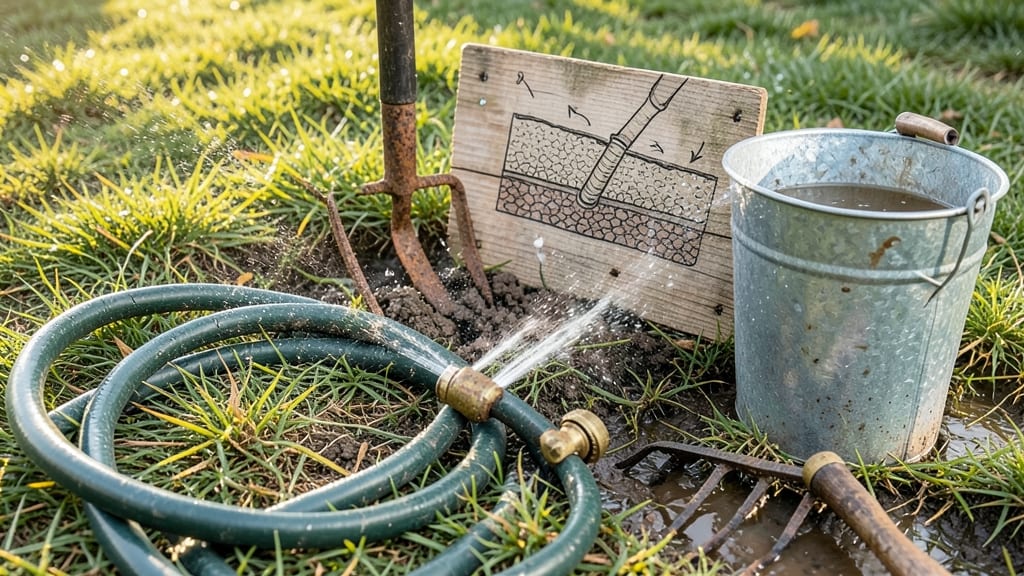
- ● Garden hose (with adjustable nozzle) – For draining excess water or light irrigation.
- ● Drainage tools: Shovel (flat-edged) – For digging shallow trenches or adjusting soil levels.
- ● Garden rake (with sturdy tines) – To level soil and break up compacted areas.
- ○ Drainage pipe (4-inch corrugated plastic, 10–20 ft) – Optional but helpful for severe waterlogging.
- ● Aeration tools: Manual aerator (spike or slicing type) – For small lawns (rental available).
- ● Core aerator (mechanical, if available) – Best for large lawns (borrow or rent).
- ● Soil amendments (choose 1–2 based on your lawn’s needs): Perlite or coarse sand (5–10 lbs) – Improves drainage in clay-heavy soil.
- ● Peat moss or coconut coir (1–2 bags) – Enhances soil structure and water retention.
- ● Compost (2–3 cubic feet) – Adds nutrients and improves aeration.
- ● Lawn mower (with sharp blades) – Set to a higher height (3–4 inches) to reduce stress on recovering grass.
- ● Waterproof gloves & knee pads – Because nobody enjoys soggy, muddy hands or knees! 🧤💦
- ● pH testing kit – To check soil pH (ideal range: 6.0–7.0 for most grasses).
- ● Soil moisture meter – Avoids guesswork on hydration levels.
- ● Lawn fertilizer (low-nitrogen, high-potassium) – Helps roots recover (e.g., 5-10-10 ratio).
- ● French drains or swales – For chronic waterlogging issues (DIY or hire a pro).
- ● Mulch (straw or wood chips) – Retains moisture after drainage is fixed.
- ● Lawn repair seed mix – For patching bare spots post-aeration.
Step-by-Step instructions for reviving an overwatered lawn
Here's how I turn soggy, struggling lawns back to healthy in just a few days.
💧 Step 1: Stop Watering and Improve Drainage Immediately
Turn off your irrigation system or stop manual watering right away—even if the grass looks thirsty. Overwatered lawns need time to dry out and recover. Walk the lawn in socks (no shoes!) to test drainage: if water pools on the surface after a few steps, you’ve got serious drainage issues.
Rake away any standing water and use a garden fork to poke 6-inch deep holes every 12 inches in compacted areas. This creates temporary drainage channels. For larger areas, consider renting a core aerator to pull 3-inch deep plugs of soil—this opens up pathways for water to escape and roots to breathe.
✂️ Step 2: Mow High and Remove Thatch Buildup
Set your mower blade to its highest setting—3 to 4 inches—and mow the entire lawn. Taller grass shades the soil, reducing evaporation and protecting tender roots. Bag the clippings, as wet grass clumps can smother the lawn further. If you see a thick, spongy layer between the grass blades and soil (thatch), use a thatch rake to remove ½ inch or less—never tear into the soil.
This step is critical: thick thatch traps moisture against the roots, slowing recovery. I like to do this on a dry day so the lawn has time to settle before the next step. Watch for yellow patches—these often indicate fungal issues from prolonged wetness, which will need extra attention later.
🪴 Step 3: Aerate and Top-Dress with Sand or Compost
Rent a core aerator or hire a service to aerate the lawn, especially if the soil feels hard or water pools after rain. The machine pulls 3-inch deep plugs of soil, leaving holes that improve airflow and drainage. Walk over the lawn afterward to break up any remaining compacted spots with your feet—this helps the soil settle faster.
After aerating, spread a ¼-inch layer of coarse sand or 50% sand, 50% compost mix over the entire lawn. This top-dressing fills the aeration holes and improves soil structure. Use a broadcast spreader for even coverage, then lightly rake it into the holes. Avoid heavy materials like mulch, which can suffocate the lawn as it recovers.
☀️ Step 4: Water Lightly and Gradually Restore Routine
Once the soil feels dry 2 inches deep (test with a screwdriver), resume watering—but only ½ inch per week, split into two sessions. Deep watering encourages roots to grow downward, while light, frequent watering keeps the surface moist. Use a rain gauge or tuna can to measure—eyeballing it leads to overwatering again.
Wait 7 to 10 days before fertilizing. If the lawn shows brown patches, these are likely dead grass blades—don’t panic. New growth will push through within 2 to 3 weeks if the soil dries out properly. I avoid synthetic fertilizers at this stage; instead, I use a low-nitrogen, slow-release organic fertilizer to avoid shocking the recovering roots.
⏰ Step 5: Monitor and Adjust for Long-Term Health
Check the lawn every 3 to 4 days for signs of improvement: new growth at the base of blades, less yellowing, and firmer soil. If water still pools after rain, consider installing French drains or grading the yard to slope away from the house. A soil test will tell you if you need to adjust pH or add nutrients—overwatered lawns often lack nitrogen and microorganisms.
Once the lawn is back to normal, stick to a weekly watering schedule of 1 inch per week, either from rain or irrigation. I set reminders on my phone to check soil moisture before watering—this habit saves me from repeating the same mistakes. Over time, your lawn will develop deeper roots and better resilience to wet spells.
Tips & tricks for reviving a soggy lawn fast
These practical strategies will help you skip the common pitfalls and get your lawn back on track in no time.
Timing is Everything: In Step 1, when you're poking those 6-inch deep holes with your garden fork, work in dry conditions if possible. Wet soil compacts more easily, making your drainage efforts less effective. I've found that early morning or late afternoon—when temperatures are cooler—is ideal for this step, as the soil holds its shape better and you avoid the midday heat.
Drainage Test Hack: That sock test in Step 1 is genius, but here's a pro move: after walking across the lawn, press your foot firmly into the ground. If water seeps up through your sock within 10 seconds, you've got poor drainage that needs immediate attention. This quick check saves you from overworking areas that don't need it.
Thatch Removal Precision: When you're removing thatch in Step 2, focus on areas where the grass feels spongy rather than uniformly across the entire lawn. I learned this the hard way—removing healthy thatch (which actually protects roots) can do more harm than good. Look for that ½-inch layer that feels like a thick mat between your fingers and the soil below.
Top-Dressing Technique: For the ¼-inch layer of sand or compost mix in Step 3, use a push broom to spread it evenly before raking. This creates a more uniform coverage than just throwing it down. I like to work in small sections—about 5 feet by 5 feet at a time—to maintain consistency. The goal is to fill those aeration holes completely without creating piles that could suffocate the lawn.
Pro Tips for Fix Overwatered Lawn
- These practical strategies will help you skip the common pitfalls and get your lawn back on track in no time.
- Timing is Everything: In Step 1, when you're poking those 6-inch deep holes with your garden fork, work in dry condit...
- Drainage Test Hack: That sock test in Step 1 is genius, but here's a pro move: after walking across the lawn, press y...
Frequently asked questions
Got questions about fixing an overwatered lawn? You’re not alone—watering woes happen to the best of us! Here are some of the most common concerns and straightforward answers to get your grass back on track.
How long does it take to fix an overwatered lawn?
Recovery time depends on how severe the damage is, but you’ll usually see improvement within 1–2 weeks if you adjust watering immediately. For deep root issues, it may take up to 4–6 weeks. Aerating and overseeding can speed up the process by improving drainage and encouraging new growth.
Can I still save my lawn if the grass is turning brown and mushy?
Yes! Mushy, brown patches are a sign of fungal growth or root rot, but don’t panic. First, stop watering and let the soil dry out. Then, rake out dead patches, aerate, and reseed. If the damage is extensive, consider a lawn repair mix for faster recovery.
How often should I water after fixing an overwatered lawn?
Aim for deep, infrequent watering—about 1–1.5 inches per week, including rainfall. Water early in the morning (before 10 AM) to reduce evaporation and fungal risks. Let the top 2–3 inches of soil dry between waterings to prevent future overwatering.
What’s the best alternative to frequent watering for a healthy lawn?
Instead of daily light watering, try mulching (like grass clippings or wood chips) to retain moisture, or install a soaker hose for slow, deep hydration. Also, mow high (3–4 inches) to shade roots and reduce water loss. Drought-resistant grass varieties can also cut water needs long-term!
Why does my lawn still look bad after I’ve stopped overwatering?
If your lawn isn’t improving, check for underlying issues like compacted soil, poor drainage, or pests. Test your soil’s pH—ideal levels (6.0–7.0) help grass absorb nutrients. If needed, aerate again or apply a slow-release fertilizer to boost recovery.
Still stumped? Drop your specific symptoms in the comments—we’re happy to help diagnose!
Wrapping up and next steps
Fixing an overwatered lawn takes patience and the right steps—but you’ve got this! 🌱 By draining excess water, aerating compacted soil, and reviving roots with proper care, your grass will bounce back stronger than ever.
Start small, stay consistent, and watch your lawn transform into a lush, healthy oasis.
Ready to take action? Grab your tools and begin today! Your lawn’s revival starts with one step at a time—so roll up those sleeves and get growing. 🌿