
How To
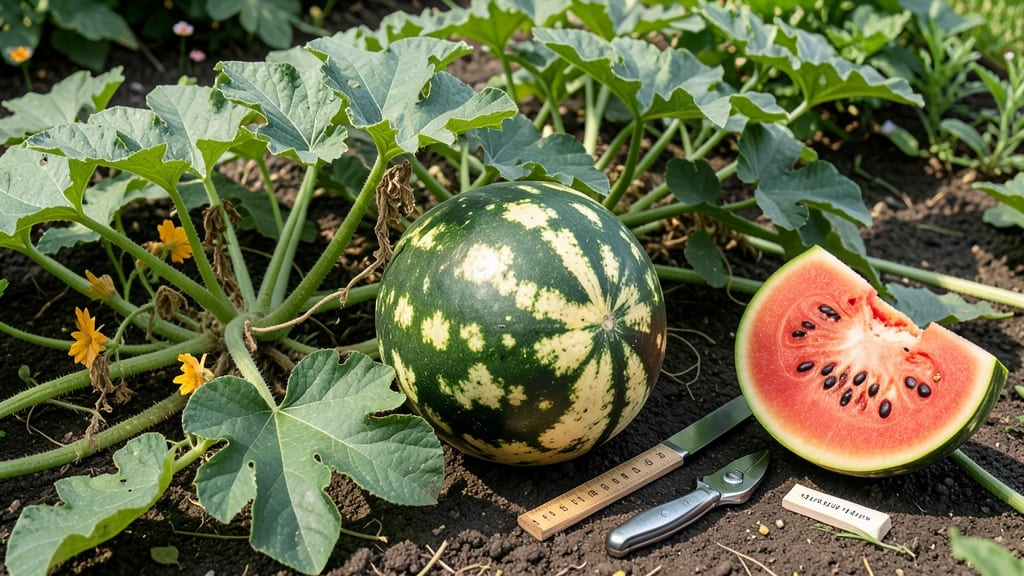
Knowing how to know when watermelon is ready to harvest can turn a guesswork game into a foolproof victory—no more bland, underripe fruit or mushy overripe disappointments. The difference between a sweet, juicy slice and a tough, seedy mess often comes down to a few simple field tests that most gardeners overlook.
I’ve spent years growing 🍉 in Zone 6a, and the 3 key signals I rely on—rind color shifts, tendril drying, and that satisfying thump—never fail.
Whether you’re planting in late April or extending your season into September, these tricks work for every variety, from seedless Sugar Babies to classic Crimson Sweets.
What if you could tell ripeness just by looking at the ground or giving the melon a gentle shake? You can—and I’ll show you how to spot those hidden clues before cutting into your hard work. Let’s save you from the common mistakes that lead to wasted harvests.
By the end, you’ll confidently pick watermelons at their peak, with shelf life that lasts weeks. Ready to master the art of the perfect harvest?
3 Field tests to determine watermelon ripeness (with visual cues)
Watermelons don’t send clear "ripe now" signals like tomatoes or peppers, but three science-backed field tests reveal their sweetest peak. The thump test, ground-spot check, and tendril inspection each uncover different clues about sugar content, maturity, and structural readiness. Combine all three for foolproof results—no guesswork needed.
Start with the thump test, the most famous (and fun) method. Hold the watermelon with one hand and thump the opposite side with your knuckles. A deep, hollow rattle means the seeds have fully developed and the flesh is juicy.
Skip this if the melon feels too soft—overripe fruit thumps like a drum.
Next, inspect the ground-spot, the pale yellow or cream-colored patch where the melon rested on the soil. A fully ripe watermelon’s ground-spot will turn creamy yellow or buttery beige. Avoid green or white spots—these signal underripe fruit. This cue works best for dark-rinded varieties like Crimson Sweet.
The tendril test is my favorite for precision. Locate the small vine (tendril) closest to the watermelon’s stem. When ripe, this tendril will turn brown and crispy—almost like dried straw.
If it’s still green or slightly wilted, wait 2–3 more days. Pro tip: Check multiple tendrils on larger melons for consistency.
| Test | What to Look For | Ripeness Indicator | Best For |
|---|---|---|---|
| Thump Test | Hollow rattle when tapped | Seeds fully developed, juicy flesh | All varieties |
| Ground-Spot Check | Creamy yellow/beige patch | Full sugar development | Dark-rinded types |
| Tendril Inspection | Brown, crispy tendril | Maturity confirmation | All varieties |
| Rind Color | Deep, solid hue (no streaks) | Variety-specific maturity | Yellow/charcoal rinds |
| Blossom End | Yellow/brown stem end | Final ripeness cue | All varieties |
Don’t overlook rind color, which varies by variety. For yellow-fleshed types like Yellow Doll, the rind should turn pale yellow with green stripes fading. Red-fleshed varieties like Sugar Baby develop a deep, uniform green or charcoal rind. Avoid melons with white streaks or uneven coloring—these often stay underripe.
Press your thumbnail into the rind near the blossom end (the white patch where the stem attaches). If the skin doesn’t dent and feels tough, it’s ready. A soft spot means overripe fruit. This test works best in morning sunlight when the rind is firmest.
For seedless varieties, rely more on the tendril and thump tests since their rinds often stay green longer. Seedless watermelons like Sugar Baby or Triple Crown typically ripen 5–7 days earlier than seeded types, so check them more frequently.
Regional heat affects ripening speed. In hot climates (Zones 8–10), watermelons may ripen in 60–70 days—watch for early signs. In cooler areas (Zones 4–6), extend your timeline to 80–90 days and prioritize the tendril test.
Harvest on a dry, sunny morning to preserve sweetness. Use a sharp knife or pruners to cut the stem, leaving 1–2 inches attached. Store in a cool, shady spot (50–55°F) for up to 2 weeks—ripe melons last longer than underripe ones.
Watermelon ripeness by variety: what to look for in seedless vs. seeded types
Not all watermelons ripen the same way—seedless varieties like Sugar Baby or Triple Crown often show subtler ripening cues compared to traditional seeded types like Crimson Sweet or Charleston Gray.
Understanding these differences helps you avoid harvesting too early or too late. Seedless melons, for example, may never fully turn yellow at the blossom end but still reach peak sweetness.
For seedless watermelons, focus on tendril browning and rind texture rather than color changes. These varieties often mature faster (60–75 days) and may stay smaller (10–15 lbs), so size alone isn’t a reliable indicator.
Meanwhile, seeded varieties like Jubilee or Black Diamond typically take 80–90 days and grow larger (20–30 lbs), with more pronounced color shifts.
Here’s how to adapt your harvest tests based on the type you’re growing. The key? Combine multiple cues—no single method works perfectly for every variety.
For seedless varieties, the crease color (the white stripe down the middle) is your best friend. When it turns yellow or slightly brown, the melon is likely ready—even if the rind stays green. Meanwhile, seeded types often develop a dull, matte finish on the rind, signaling sugar development.
Pro tip: Smaller seedless melons (like Sugar Baby) ripen faster than larger seeded ones, so check them 2–3 weeks earlier.
Regional climate also plays a role. In hotter zones (USDA 9–11), watermelons may ripen faster due to accelerated sugar production. If you’re in a cooler climate (USDA 6–8), extend your harvest window by 1–2 weeks and prioritize ground-spotting over color cues, as cooler temps slow pigment changes.
Once you’ve confirmed ripeness, harvest with a sharp knife or pruners**, leaving 1–2 inches of stem attached. This prevents bruising and extends shelf life by up to 2 weeks when stored in a cool, dry place.
🌱