
Picking
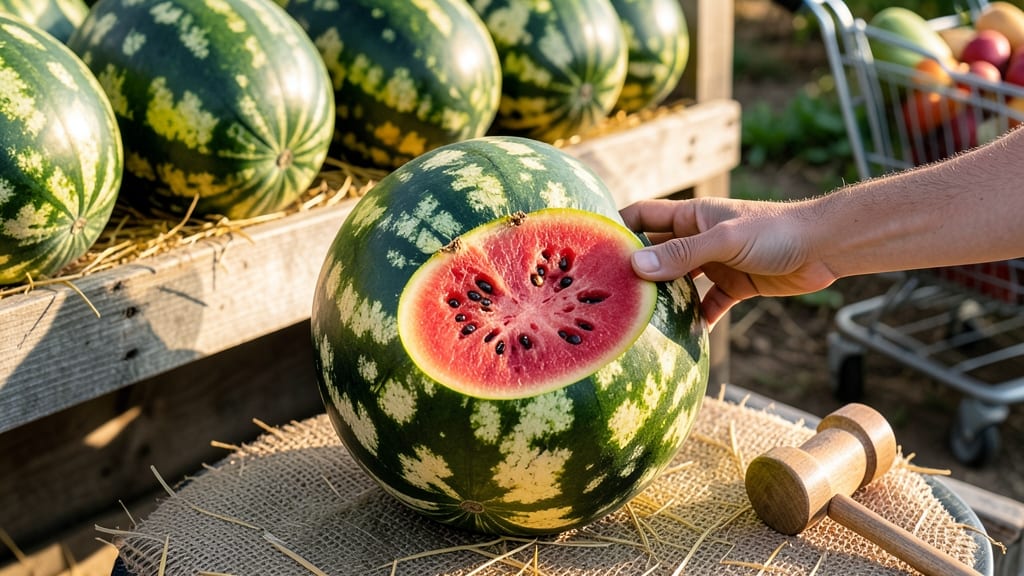
That hollow thump means a juicy watermelon—here’s how to pick a ripe watermelon at the store every time. 🌿 Nothing beats slicing into a perfectly ripe watermelon, but store-bought ones often disappoint.
I've cracked the code after buying more than my fair share of rock-hard or mushy melons over the years.
Start with the underside—it should have a creamy yellow spot where it sat on the ground. Then check the stem: if it's still attached, it was recently harvested.
The real test? Give it a firm thump with your knuckles—ripe melons sound deep and hollow, while unripe ones thud like a drum.
You'll avoid the two biggest mistakes: overripe melons (soft spots, fermented smell) and underripe ones (hard as a rock). A ripe watermelon feels heavy for its size, with a slightly rough, dull rind—never shiny or waxy. These clues work for any store-bought melon, from seedless to heirloom varieties.
Pro tip: Compare two melons side by side—the better one will have all these signs. Once you master this, you'll never buy a disappointing watermelon again. The secret's in the details, not just the thump.
📚 In This Guide
- What you need
- Instructions
- Tips and common mistakes
- Wrapping up and next steps
What you need
- ● Watermelon – Choose 1-2 whole watermelons (depending on your needs). Look for ones weighing 15–25 lbs for ideal ripeness.
- ● Flat surface – A clean, stable table or counter (for thumping tests).
- ● Your hands – For feeling the watermelon’s texture, weight, and stem.
- ● Eyes & ears – To inspect color, check for field spots, and listen for the thump!
- ● Knit or knuckle – For a softer thump test (instead of your knuckles).
- ● Small knife or peeler – To check the rind’s thickness or cut a tiny sample if needed.
- ○ Scale (optional) – To weigh the watermelon for size consistency (15+ lbs = better odds of ripeness).
- ● Flashlight – For inspecting hard-to-see field spots in dim lighting.
Step-by-Step instructions for picking perfectly ripe watermelons
Here's how I spot a sweet, juicy watermelon every time—no guesswork involved.
🌱 Step 1: Check the Field Spot
The first clue is the field spot, that creamy yellow or orange patch where the melon rested on the ground. A ripe watermelon's spot should be deep yellow or orange—never white or pale. Press gently: if it gives slightly under your thumb, the melon's been ripening longer and has more sugar. I avoid spots that are too dark or sunken, as those can indicate overripeness or rot.
Run your fingers over the field spot's edges. The skin should feel slightly rough to the touch, not smooth. Smooth skin often means the melon was picked too early. Here's the thing—this spot tells you more about ripeness than any other single factor, so don't skip it.
💧 Step 2: Perform the Thump Test
Flip the watermelon over and thump the opposite side of the field spot with your knuckles. A ripe watermelon should produce a deep, hollow sound—like knocking on a wooden door. If it sounds dull or flat, the melon's underripe. Overripe melons sometimes make a thudding or muffled sound, so listen carefully. I tap each melon 2-3 times to confirm consistency—the sound should be the same every time.
Don't worry about cracking the skin. Watermelons are tougher than they look, and a light thump won't damage them. If you hear a high-pitched ping, walk away—this usually means the melon was picked too early and won't be sweet.
☀️ Step 3: Examine the Stem End
The stem end (where the melon was attached to the vine) should have a small, dry brown spot about the size of a quarter. This indicates the melon was harvested at peak ripeness. If the stem end looks green or fresh, the melon was picked early and likely won't be sweet. Avoid melons with a large, soft, or mushy stem end—these are overripe and may be spoiled inside.
Run your thumb along the stem end's edge. You should feel a slight ridge where the vine was attached. A smooth transition means the melon was cut from the vine, which can sometimes affect flavor. I always check this last because it's the most subtle clue, but it confirms what the field spot and thump test already told me.
✂️ Step 4: Weigh and Compare
Lift the watermelon—it should feel heavy for its size. A ripe watermelon is about 92% water, so heavier melons with fewer seeds are sweeter. Compare two melons side by side: the heavier one is usually the ripest. I avoid melons that feel light or hollow, as these often have less juice and more seeds.
Look for symmetry. A perfectly ripe watermelon should be evenly shaped with no deep dents or soft spots. Uneven shapes can indicate uneven ripening or damage. If you find a melon that checks all the boxes—field spot, thump test, stem end, and weight—you've likely found a winner.
🌿 Step 5: Smell for Sweetness
Give the watermelon a gentle sniff near the stem end. A ripe watermelon should have a sweet, floral aroma. If it smells musty, sour, or like ammonia, it's overripe or spoiled. Some melons have a faintly earthy scent, which is normal, but sweetness should dominate. I know this step seems simple, but our noses are surprisingly good at detecting ripeness—trust it.
If the melon passes all these tests, it's ready to take home. Cutting one open to check is a last resort—save that for the melon you're actually planning to eat. The best part? These tricks work every time, whether you're shopping at a farmers' market or the grocery store.
Tips & tricks for perfectly ripe watermelon selection
These insider tricks will help you find the sweetest, juiciest watermelons every time—no guesswork required.
Field Spot Insight: The field spot's color is your first clue, but texture matters even more. Press firmly—if it leaves a slight dent that slowly springs back, that's perfect ripeness. Too soft? Overripe. Too hard? Underripe. I've learned to trust this test more than any other single factor, even over the thump test in some cases. The rough texture around the edges is another key indicator of proper ripening.
Thump Test Technique: When performing the thump test in Step 2, use your knuckles—not your palm—for better sound accuracy. The hollow sound should be consistent across 2-3 taps. Pro tip: If you're shopping with kids, have them listen for the "door knock" sound—it makes the process fun while ensuring accuracy. Remember, a high-pitched ping means underripe, while a dull thud signals overripe.
Stem End Secrets: That small brown spot at the stem end should be crisp to the touch, not mushy. I've seen many shoppers overlook this detail, but it's actually one of the most reliable indicators. Run your thumb along the edge—you should feel a slight ridge where the vine was attached. This ridge confirms the melon was properly harvested and has been ripening naturally on the vine.
Weight Wisdom: The heavier watermelon is almost always the winner, but don't just lift—compare. Place two melons side by side and pick up the heavier one. That 92% water content makes all the difference in juiciness. I've noticed that seedless varieties often feel slightly lighter for their size, so adjust your expectations accordingly. Symmetry matters too—uneven shapes can mean uneven ripening.
Pro Tips for Pick Ripe Watermelon At Store
- These insider tricks will help you find the sweetest, juiciest watermelons every time—no guesswork required.
- Field Spot Insight: The field spot's color is your first clue, but texture matters even more.
- Thump Test Technique: When performing the thump test in Step 2, use your knuckles—not your palm—for better sound accuracy.
Frequently asked questions
Got questions about picking the perfect watermelon? You’re not alone! Here are some of the most common queries—plus quick, foolproof answers to help you avoid the "squishy disappointment" at checkout.
How do I know if a watermelon is ripe without cutting it open?
Use the thump test (tap the watermelon—it should sound hollow and deep, not dull), check the field spot (the creamier, the riper), and look for a symmetric shape and dull rind. If it’s heavy for its size, that’s a bonus—it’s juicier!
Can I pick a watermelon too early or too late? What’s the best time to buy?
Watermelons ripen on the vine, so late summer to early fall (July–September in most regions) is prime time. Avoid buying in early spring or late fall—they’re often underripe or overripe. Pro tip: Store-bought melons are usually picked at peak ripeness, but still test them!
What if the store doesn’t let me thump watermelons? Any other tricks?
No thumping? No problem! Look for:
- Field spot (cream/yellowish = ripe; white = underripe)
- Heavy weight (means more water = juicier)
- Dull rind (shiny = overripe or waxed)
- Symmetrical shape (lopsided = uneven ripening)
What do I do if I bring home a watermelon that’s not ripe?
If it’s underripe, place it in a cool, dark spot (like a pantry) for 1–2 weeks. Avoid refrigerating it—cold speeds up spoilage. If it’s overripe, eat it ASAP or freeze the flesh for smoothies (save the rind for broth!).
Are seedless watermelons easier to pick than regular ones?
Not necessarily! Seedless watermelons (like Sugar Baby or Seedless Crimson Sweet) ripen similarly to seeded ones—just focus on the same clues (field spot, thump test, weight). They’re often smaller and sweeter, so don’t assume size = ripeness. A heavy, dull seedless melon is your best bet!
What if the watermelon smells bad or has mold?
Trust your nose! A sour, fermented, or overly sweet smell means it’s spoiled. Mold (fuzzy spots) is a hard no—toss it. If the rind is soft or mushy, it’s overripe. When in doubt, cut it open—no risk of food waste is worth bad watermelon!
Wrapping up and next steps
Picking the perfect watermelon at the store is easier than you think! 🍉 With the thump test, field spot secrets, and a few extra tricks, you’ll always bring home a juicy, ripe melon. Trust your instincts—confidence is key when you’re shopping!
Now that you’re armed with expert tips, grab a watermelon and put your new skills to the test. Next time you’re at the store, challenge yourself to find the sweetest one in minutes—you’ve got this! 🚀