
Tools
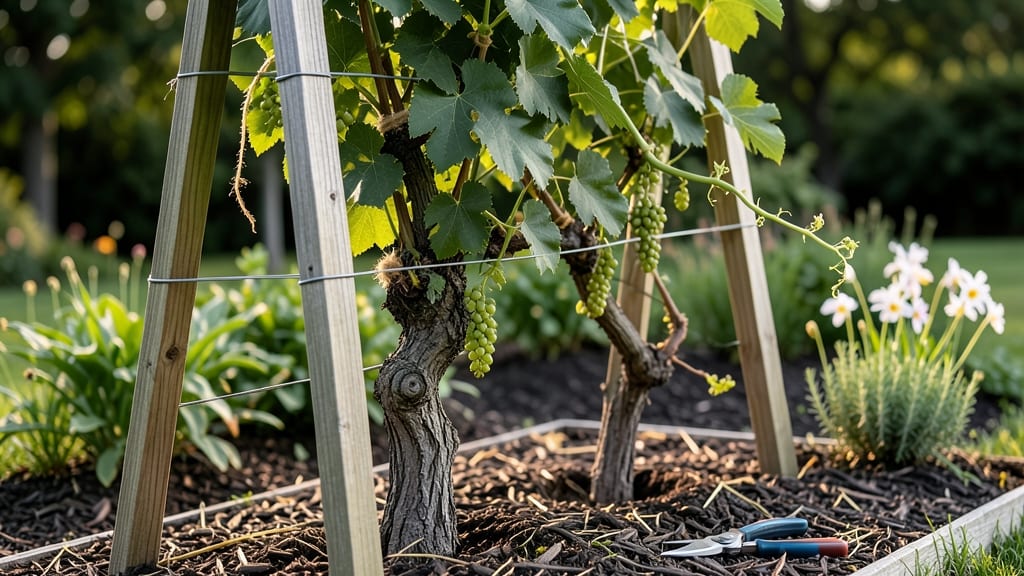
Building a muscadine trellis changed how I harvest grapes—no more wrestling with sprawling vines. 🌿 These heavy vines need strong support to keep fruit off the ground and prevent disease, and the right trellis makes all the difference.
Most gardeners default to basic wooden posts, but I’ve found T-bar or pergola designs work best for muscadines—they handle the weight while keeping vines organized. Spacing matters too: 8-10 feet between posts gives vines room to spread without sagging.
You’ll end up with a clean, accessible harvest every season, and the trellis lasts for years with proper maintenance. The vines climb faster, fruit ripens more evenly, and you avoid the back-breaking work of picking from the ground. Works for both small backyard patches and larger commercial setups.
Let’s get those posts in the ground!
📚 In This Guide
- What you need
- Instructions
- Tips and common mistakes
- Wrapping up and next steps
What you need
- ● T-posts or metal fence posts: 6–8 posts (5–6 feet tall, spaced 8–10 feet apart in rows). Opt for galvanized or pressure-treated wood for durability.
- ● Horizontal support beams: 2x4 or 4x4 lumber (8–10 feet long, depending on spacing). Treated wood resists rot—critical for longevity!
- ● Cross-bracing: 2x2 or 1x4 stakes (cut to 4–5 feet) for diagonal stability. Add these between posts to prevent leaning.
- ● Trellis wire or strong twine: 16–18 gauge galvanized wire (or jute twine for a rustic look). Stretch horizontally every 12–18 inches up the posts.
- ● Post-hole digger or auger: For digging holes 12–18 inches deep (or rent a post driver for ease).
- ● Concrete or gravel: To anchor posts securely (at least 2–3 bags of quick-setting concrete per post).
- ● Measuring tape, level, and speed square: Precision ensures your trellis stays plumb and even.
- ● Drill/driver + screws or lag bolts: For assembling beams and cross-bracing (3-inch deck screws or ½-inch lag bolts work well).
- ○ Staple gun (optional but handy): For securing wire or twine to the trellis frame.
- ● Post caps: Protect the tops of wooden posts from water damage.
- ● Vine clips or soft ties: Gently guide muscadine vines upward without damaging them.
- ● Pruning shears: For trimming excess growth later in the season.
- ● Landscape fabric: Lay under the trellis to suppress weeds and retain moisture.
Step-by-Step instructions for building a muscadine trellis
Here's how to construct a sturdy, long-lasting trellis that handles muscadine vines' aggressive growth and heavy fruit loads.
🪴 Step 1: Choose and Prepare Your Site
Muscadine vines thrive in full sun and need space to sprawl, so select a location with at least 15 feet of clear ground along a fence or wall. The trellis should run parallel to a sturdy anchor point—wooden posts, metal stakes, or existing structures work best. Clear the area of debris and mark your layout with 4-foot-long wooden stakes at each corner and every 8 feet along the length.
Dig holes for the posts using a post hole digger—2 feet deep for 4x4 posts and 18 inches deep for 6x6 posts. The deeper the hole, the more stable your trellis will be, especially when laden with fruit. Tamp the soil firmly around each post as you set them, leaving 12 inches above ground for the trellis frame.
✂️ Step 2: Assemble the Trellis Frame
Cut 2x4 lumber into horizontal slats—4 feet long for the top rail and 3 feet long for the middle and bottom rails. Attach these parallel to the posts using 3-inch deck screws, spacing them 12 inches apart vertically. The top rail should sit 6 feet off the ground to accommodate the vine's climbing habit, while the middle and bottom rails provide support for lateral branches.
For added strength, install diagonal braces between the posts and rails using 2x2 lumber. This prevents the frame from sagging under the weight of muscadines, which can produce 2-3 pound grapes per cluster. Use a level to ensure all rails are perfectly horizontal—uneven surfaces will cause vines to grow unevenly and make harvesting difficult.
🌿 Step 3: Install the Vine Support System
Attach ½-inch-thick jute twine or sturdy garden twine horizontally between the posts, stretching it taut from the bottom rail to the top. Space the twine 6 inches apart vertically—this creates a ladder-like structure that guides the vine's growth upward while allowing airflow to prevent disease. Avoid using wire, as it can damage the vine's bark as it thickens.
At the base of each post, install a 5-gallon bucket or concrete footing to weigh down the structure and prevent it from tipping when vines mature. Muscadines can grow 30+ feet in a season, so securing the trellis early saves headaches later. Test the stability by gently pulling on each post—if it wobbles, add more braces or deeper anchors.
☀️ Step 4: Train the Vine and Maintain the Trellis
Once your muscadine vine is established, select the strongest shoot and tie it to the bottom twine using soft cloth or rubber strips—never wire, which can girdle the stem. As the vine climbs, guide it upward, securing it to each twine level with a loose knot. The goal is to encourage vertical growth while keeping branches from overcrowding, which reduces fruit quality.
Check the trellis annually for loose screws, sagging rails, or damaged wood. Sand rough edges and apply a non-toxic wood sealant every 2-3 years to extend its life. Prune the vine in late winter to remove dead wood and thin overcrowded branches—this keeps the trellis from becoming overburdened and ensures better air circulation for healthier fruit.
Tips & tricks for building a sturdy muscadine trellis
Building a trellis that can handle muscadine vines' aggressive growth requires thoughtful planning—and these key strategies will help you avoid common pitfalls while creating a structure that lasts for years.
Post Placement Matters: When marking your layout in Step 1, use a string line between the corner stakes to ensure perfectly straight alignment. Muscadine vines can exert hundreds of pounds of pressure as they mature, so even a slight deviation in post placement can cause the entire structure to lean. I've seen trellises collapse because the posts weren't perfectly parallel—don't let that be you. Use a 4-foot level to verify alignment before digging any holes.
Lumber Selection for Longevity: In Step 2, opt for pressure-treated 2x4 lumber and 2x2 lumber over standard pine—it resists rot and insect damage far better, especially in humid growing conditions. Cedar is another excellent choice if you want a more natural look without chemical treatments. Avoid using untreated wood in ground contact areas, as it'll rot within 2-3 years under muscadine vines' moisture demands.
Twine Tension Technique: The 6-inch vertical spacing for twine in Step 3 is crucial, but tension matters just as much. Stretch the twine taut enough that it doesn't sag between posts, but not so tight that it cuts into the vine's bark. I like to use a small rubber band to create a loop at each post connection—this prevents the twine from slipping while allowing gentle give as the vine grows. Test the tension by pulling downward with 10 pounds of force; it should only move slightly.
Pro Tips for Build A Muscadine Trellis
- Building a trellis that can handle muscadine vines' aggressive growth requires thoughtful planning—and these key strategies will help you avoid common pitfalls while creating a structure that lasts for years.
- Post Placement Matters: When marking your layout in Step 1, use a string line between the corner stakes to ensure perfectly straight alignment.
- Lumber Selection for Longevity: In Step 2, opt for pressure-treated 2x4 lumber and 2x2 lumber over standard pine—it resists rot and insect damage far better, especially in humid growing conditions.
Frequently asked questions
Got questions about building a muscadine trellis? You’re not alone! Here are some of the most common concerns—and their practical solutions—to help you get started with confidence.
What’s the best time of year to build a muscadine trellis?
Plant your muscadine vines in early spring (before bud break) or late fall (after leaf drop). Building the trellis in late winter or early spring gives you time to establish roots before the growing season. If you’re adding a trellis to an existing vine, do it in dormant season (winter) to minimize stress on the plant.
Can I use wood scraps or repurposed materials instead of buying new supplies?
Muscadine trellises are sturdy and forgiving. Use pressure-treated lumber, cedar, or even galvanized metal pipes for posts. For wires or crossbars, reclaimed fencing wire, old basketball hoop wire, or sturdy rope work well. Just ensure everything is rot-resistant and securely anchored—muscadines get heavy!
How tall should my muscadine trellis be, and how far apart should posts be spaced?
Aim for a trellis 6–8 feet tall to support mature vines and fruit weight. Space posts 8–10 feet apart for single-vine setups or 12–15 feet apart for multiple vines. Use horizontal wires or crossbars every 2–3 feet to guide vine growth upward. Pro tip: Taller trellises need deeper post holes (at least 2 feet) for stability.
What if my muscadine vines struggle to climb the trellis or produce fruit?
If vines aren’t climbing, check for proper pruning (train young shoots upward) or obstructions (weeds, debris). For poor fruiting, ensure full sun (6+ hours/day), well-draining soil, and adequate water. Muscadines also need cross-pollination—plant at least two compatible varieties nearby. If issues persist, test soil pH (5.5–6.5 is ideal) or consult a local extension office.
Are there low-maintenance trellis alternatives for small gardens?
Yes! For compact spaces, try:
- Arbor or pergola: Provides shade + support (great for patios).
- T-post system: Lightweight and easy to adjust (use for single vines).
- Obelisk or teepee: Uses bamboo stakes or metal frames for vertical growth.
- Living fence: Train vines along a sturdy fence or wire mesh.
Just ensure the structure can handle 20+ pounds per vine at harvest time!
Wrapping up and next steps
Building a muscadine trellis is a rewarding project that ensures your vines thrive and your harvests grow heavier and more manageable.
With the right materials—like sturdy posts, strong wire, and quality connectors—and a little elbow grease, you’ll create a system that supports those heavy, sprawling vines for years to come. 🌱
Now that you’ve got the know-how, it’s time to roll up your sleeves and get building! Once your trellis is up, you’ll be well on your way to easier maintenance, better airflow, and a bountiful harvest.
Next, check out our guide on pruning and training muscadine vines to maximize your trellis’s potential.