
Planting
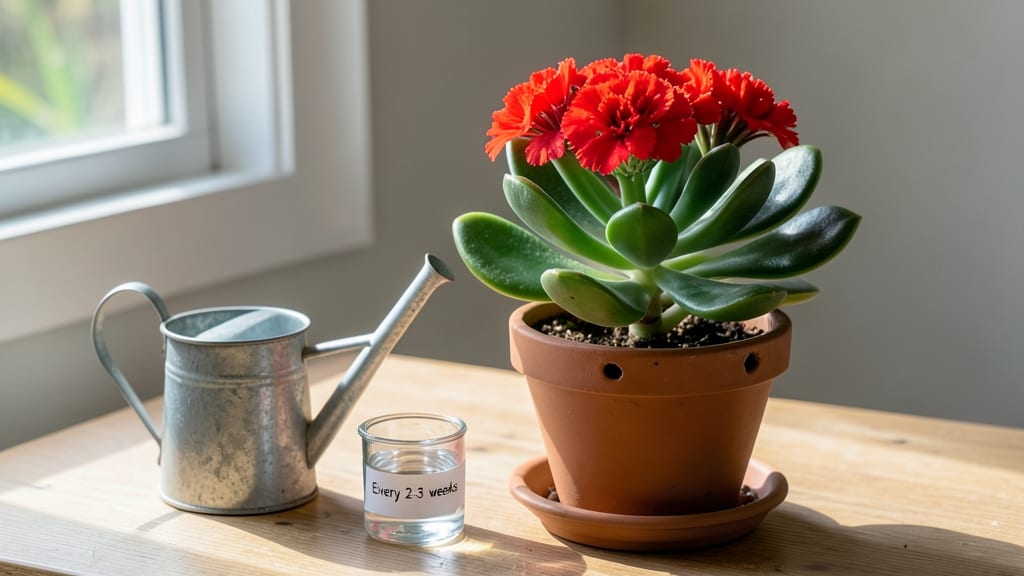
The Kalanchoe watering schedule: how often and how much to prevent root rot
Kalanchoe plants thrive on a watering schedule that mimics their natural desert-like conditions. Unlike thirsty houseplants, these succulent relatives despise soggy soil, making a soak-and-dry method your best friend.
The key is patience—water only when the top 1-2 inches of soil feel completely dry to the touch, usually every 2-3 weeks in spring and summer.
During fall and winter, when growth slows, stretch your watering interval to 3-4 weeks or even longer. This dormancy period is crucial for preventing root rot, a silent killer of Kalanchoes.
Overwatering in cooler months tricks the plant into thinking it’s spring, leading to weak stems and dropped leaves.
Your watering frequency also depends on your home’s environment. If you live in a humid climate or use a humidifier, reduce watering by 25%. Conversely, dry air from heating systems signals it’s time to water sooner.
Always check the soil before reaching for your watering can—visual cues like wrinkled leaves or a light-colored pot mean it’s thirsty.
Now, let’s break down the seasonal watering schedule in a comparison table to keep your Kalanchoe happy year-round.
| Season | Watering Frequency | Soil Dryness Test | Watering Amount | Environmental Notes |
|---|---|---|---|---|
| Spring | Every 2-3 weeks | Top 1-2 inches dry | 50-100ml per watering | Increase if in bright light |
| Summer | Every 2 weeks | Top 1 inch dry | 75-125ml per watering | Monitor for wilting faster |
| Fall | Every 3-4 weeks | Top 2-3 inches dry | 50ml per watering | Reduce as temps drop |
| Winter | Every 4-6 weeks | Top 3 inches dry | 30-50ml per watering | Almost dormant; minimal water |
When watering, aim for a deep soak rather than frequent shallow drinks. This encourages roots to grow deeper, making your Kalanchoe more resilient. Water until you see excess liquid draining from the pot’s holes, then empty the saucer immediately to prevent root suffocation.
A quick tip: Use room-temperature water to avoid shocking the roots.
For container size, smaller pots dry out faster, so water every 10-14 days in spring/summer. Larger containers can go 3-4 weeks between waterings. Pro tip: Group Kalanchoes together on a pebble tray to create a microclimate—this increases humidity slightly without overwatering.
If you’re unsure whether to water, perform the finger test: Stick your index finger into the soil. If it feels dry and crumbly, it’s time. If it’s still damp, wait another week. Remember, underwatering is easier to recover from than overwatering, so err on the side of caution.
Finally, adjust your schedule based on your Kalanchoe’s growth stage. Blooming plants need slightly more water (every 10-14 days), while non-blooming varieties can handle the soak-and-dry method more strictly. Watch for leaf plumpness—thick, firm leaves mean you’re nailing it!
With this schedule, your Kalanchoe will reward you with vibrant blooms and lush foliage for years to come. The secret? Patience and observation—your plant will tell you exactly what it needs. 🌸
The Kalanchoe watering schedule: how often and how much to prevent root rot
Kalanchoe plants thrive on neglect—but that doesn’t mean you should ignore them. Their succulent nature means they store water in leaves, so overwatering is their biggest enemy. The key is a consistent soak-and-dry cycle, where you water deeply and then let the soil dry out completely before repeating.
This mimics their natural desert habitat and prevents root rot, a silent killer of indoor Kalanchoes.
For most indoor environments, water your Kalanchoe every 2-3 weeks during spring and summer. In fall and winter, when growth slows, stretch this to every 3-4 weeks. The soil should be bone-dry 1-2 inches down before watering again—stick your finger in the soil to test.
If it feels damp, wait another week. This drought-tolerant habit is what makes Kalanchoes so low-maintenance.
🚨 CRITICAL VISUAL ELEMENT: COMPARISON TABLE 🚨
| Season | Watering Frequency | Soil Moisture Test | Water Amount |
|---|---|---|---|
| Spring | Every 2-3 weeks | Bone-dry 1-2 inches down | 50-100ml (until water drains) |
| Summer | Every 2 weeks | Dry top 1 inch | 75-125ml (adjust for heat) |
| Fall | Every 3-4 weeks | Dry 2 inches down | 50-75ml (reduce as temps drop) |
| Winter | Every 4-6 weeks | Completely dry | 25-50ml (minimal watering) |
Environmental factors like humidity and temperature play a huge role in your watering schedule. In dry, heated homes, your Kalanchoe will dry out faster, so you may need to water more frequently. Conversely, in humid conditions or during winter dormancy, reduce watering by half.
Always use a pot with drainage holes—this is non-negotiable. Without proper drainage, excess water sits at the roots, leading to rot within days.
When watering, aim for the soil, not the leaves. Use a watering can with a narrow spout to direct water to the base of the plant. Avoid getting water on the leaves, as this can cause leaf spot diseases or encourage pests.
After watering, let any excess water drain away completely—never leave your Kalanchoe sitting in a saucer of water. This simple step can extend your plant’s life by years.
Watch your Kalanchoe’s leaves for clues. Healthy leaves should feel firm and plump, like a filled water balloon. If they start to shrink or wrinkle, it’s time to water. Conversely, if the leaves feel soft or mushy, you’ve overwatered.
The color of the soil also matters: dark, moist soil means wait; light, dry soil means water. Trust these visual cues over a strict schedule—your plant will thank you.
Pro tip: Group your Kalanchoe with other succulents or cacti to create a microclimate with similar watering needs. This makes care easier and reduces the risk of overwatering. With this schedule, your Kalanchoe will bloom beautifully for years, proving that less water truly is more.