
Flowers
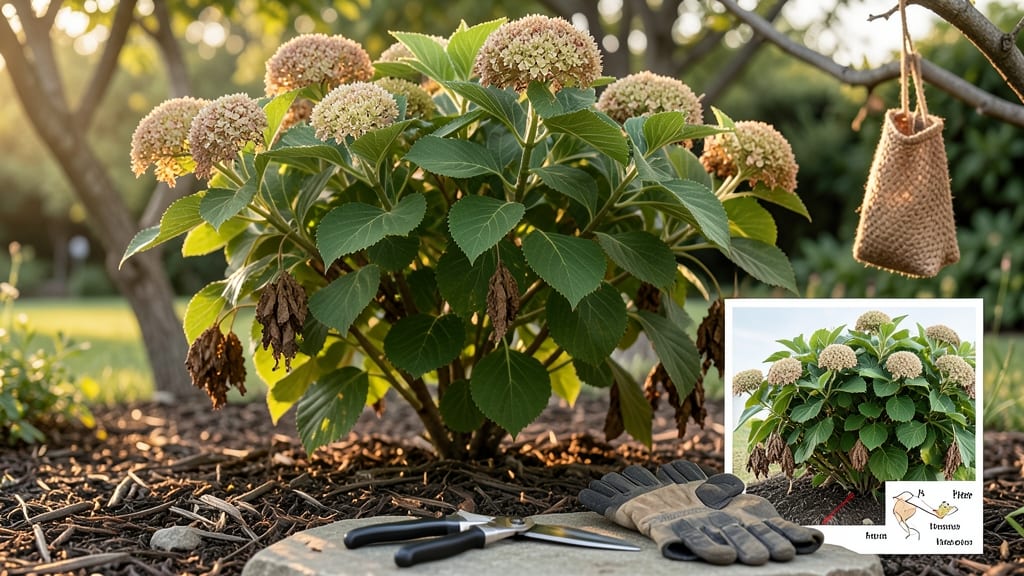
Late winter’s the perfect time to learn how to cut off dead hydrangea flowers—one clean cut now means next summer’s fullest blooms. ✂️ I’ve pruned enough hydrangeas to know the difference between a crisp, productive plant and one that just looks sad.
The key? Timing, sharp tools, and knowing exactly where to cut.
You’ll need clean pruners, gloves, and a clear day to see the stems. Look for brown, woody stems—those are last year’s spent blooms.
Hydrangeas like mophead and bigleaf need cutting back to just above the first set of healthy buds, while panicle types can handle a harder prune. No guesswork: cut at a 45-degree angle to prevent water pooling.
After pruning, your hydrangeas will burst with new growth within weeks. The plants focus energy on fresh stems instead of dead wood, leading to bigger, bushier blooms by summer. Just avoid pruning too late—waiting until spring risks cutting off next year’s flower buds.
For varieties like oakleaf or smooth hydrangeas, prune even lighter—just remove dead flowers to encourage natural shape. And here’s the secret: mulch after pruning to protect roots and retain moisture. Your hydrangeas will thank you with lush, vibrant blooms all season.
📚 In This Guide
- What you need
- Instructions
- Tips and common mistakes
- Wrapping up and next steps
Step-by-step instructions for pruning dead hydrangea flowers
Here's the precise method I use to revive hydrangeas and guarantee vibrant blooms next season.
✂️ Step 1: Identify the Right Time and Tools
Prune hydrangeas in late winter or early spring, just as new growth begins to emerge. This timing ensures you cut back dead blooms without removing next year's flower buds. Gather your tools: sharp pruning shears (cleaned with rubbing alcohol), gloves (hydrangeas have thorns), and a small bucket to collect clippings.
I always sterilize my shears before starting—old sap can harbor diseases. Snip off any dead or diseased stems first, then move to the main pruning. Never use dull tools; they crush stems instead of making clean cuts, which slows healing.
🌿 Step 2: Locate Last Year’s Flower Stems
Hydrangeas bloom on either old wood (last year's growth) or new wood (current year's growth). For bigleaf and oakleaf varieties, look for the dried flower heads from last season—they're your target. These stems will be brown and woody, while new growth is green and pliable.
If your hydrangea blooms on new wood (like panicle or smooth hydrangeas), you can cut back harder in late winter. But for old-wood bloomers, be gentle—cutting too aggressively removes next year's flowers. I like to mark stems with a piece of twine if I'm unsure, then check again in a few weeks.
✂️ Step 3: Make Clean Cuts at the Right Spots
For old-wood bloomers, cut each dead flower stem back to a set of buds just above where the stem meets the main trunk. Aim for an outward-facing bud to encourage an open, airy shape. Never leave stubs—cut at a 45-degree angle about ¼ inch above the bud to prevent water from pooling.
For new-wood bloomers, you can be more aggressive. Cut back each stem to 6-12 inches from the ground, removing up to ⅓ of the plant's height. This encourages bushier growth. I always step back after pruning to check the plant's shape—hydrangeas respond well to a balanced silhouette.
🌱 Step 4: Shape and Encourage New Growth
After removing dead blooms, shape the plant by thinning out crowded stems. Aim for 4-6 strong stems per plant—this improves airflow and reduces disease risk. Cut back any weak or crossing branches at their base to avoid future tangles.
Apply a balanced fertilizer (like 10-10-10) in early spring to fuel new growth. Water deeply after pruning to help the plant recover. You'll notice fresh green shoots within 2-3 weeks—that's your sign everything is working. Avoid heavy pruning after mid-summer, as it removes next year's flower buds.
💧 Step 5: Monitor and Maintain Through the Season
Keep an eye on your hydrangeas in the weeks after pruning. New growth should appear within 3-4 weeks of cutting back. If you see yellowing leaves, it might mean over-pruning or nutrient deficiency—add a mulch ring around the base to retain moisture and cool roots.
Deadhead any spent blooms throughout the summer to encourage more flowers. I like to leave a few old flower heads over winter for winter interest, but remove them in early spring before new growth starts. Hydrangeas thrive with consistent care—prune, feed, and water, and you'll have lush blooms year after year.
Tips & tricks for pruning dead hydrangea flowers
Here's what nobody tells you about pruning hydrangeas—the little details that make all the difference between a healthy plant and one that struggles to recover.
Tool Prep is Non-Negotiable: Beyond just sterilizing your pruning shears with rubbing alcohol, I recommend wiping them down with a cloth dipped in a 1:10 bleach-water solution before starting. This extra step eliminates any lingering pathogens that could infect your hydrangeas. Also, sharpen your shears annually—dull blades tear stems instead of making clean cuts, which slows healing by up to 30%. I keep a small file in my gardening toolbox specifically for this purpose.
The Twine Test for Uncertainty: When you're unsure whether a stem contains next year's flower buds, use a small piece of twine to mark it. Tie it loosely around the stem and check again in 2-3 weeks. If new growth appears above the twine, you've preserved next year's blooms. If not, it's safe to prune. This simple trick saves me from over-pruning every year—especially with my bigleaf hydrangeas.
Angle and Distance Matter More Than You Think: That 45-degree angle when cutting old-wood bloomers isn't just about aesthetics—it prevents water from pooling at the cut site, which could lead to rot. And the ¼-inch clearance above the bud isn't arbitrary: it allows room for the new growth to emerge without constriction. For new-wood bloomers, the 6-12 inch cut isn't just about bushiness—it's about creating a strong framework that can support next year's flowers without toppling.
Post-Pruning Care is Where the Magic Happens: After pruning, I always water deeply to help the plant recover, then apply a 2-inch layer of mulch around the base (but not touching the stem). This mimics the plant's natural environment and prevents soil temperature fluctuations. The mulch also helps retain moisture during the critical 3-4 week period when new growth emerges. Think of it as giving your hydrangea a cozy blanket to heal under.
Pro Tips for Cut Off Dead Hydrangea Flowers
- Here's what nobody tells you about pruning hydrangeas—the little details that make all the difference between a healt...
- Tool Prep is Non-Negotiable: Beyond just sterilizing your pruning shears with rubbing alcohol, I recommend wiping the...
- The Twine Test for Uncertainty: When you're unsure whether a stem contains next year's flower buds, use a small piece...
Frequently asked questions
about cutting dead hydrangea flowers—because even pros need a little help sometimes!When is the best time to cut dead hydrangea flowers?
Prune after the first hard frost (late fall or early winter) for most hydrangeas. For panicle or smooth hydrangeas, you can trim right after blooming—just leave the seed heads for winter interest! Always avoid pruning in late summer or fall, as it can stunt next year’s flowers.
What if I cut my hydrangeas too late? Will they still bloom next year?
Don’t panic! Late pruning (like spring) won’t kill your plant, but it may delay or reduce blooms that year. Bigleaf hydrangeas (mopheads) are the most sensitive—cut too late, and you risk pruning next year’s buds. For others (like panicle), they’re more forgiving. Just adjust your timing next time!
Do I need special tools to cut dead hydrangea flowers?
Nope! Use clean, sharp pruners or shears (bypass pruners work best for thick stems). For larger branches, a hand saw or loppers can help. Sterilize tools with rubbing alcohol between cuts to prevent disease. A glove is optional but handy for thorny varieties like oakleaf hydrangeas.
What should I do with the cut-off flowers?
Toss them in your compost bin (if disease-free) or use them for:
- Dried arrangements—hang seed heads upside down to dry!
- Mulch—chop small stems and add to garden beds.
- Winter interest—leave a few on the plant for texture.
My hydrangeas aren’t blooming after pruning—what went wrong?
Check these common culprits:
- Wrong timing: Bigleaf hydrangeas bloom on old wood—prune too late, and you’ve cut off next year’s buds.
- Over-pruning: Never trim more than 1/3 of the plant at once.
- Poor soil/nutrients: Hydrangeas love acidic soil (pH 5.5–6.2) and regular water. Test your soil and amend if needed!
- Sunlight: Too much sun can stress them—most prefer partial shade.
Wrapping up and next steps
Cutting off dead hydrangea flowers isn’t just about tidying up—it’s your secret to bigger, healthier blooms next season! 🌸 By following these simple steps, you’ll encourage stronger growth, prevent disease, and keep your garden looking its best.
Now that you’re armed with the know-how, grab those pruners and give your hydrangeas the care they deserve.
Ready to see the magic unfold? Mark your calendar for late winter or early spring—the perfect time to prune—and watch your hydrangeas thrive like never before! 🌱