
Pruning
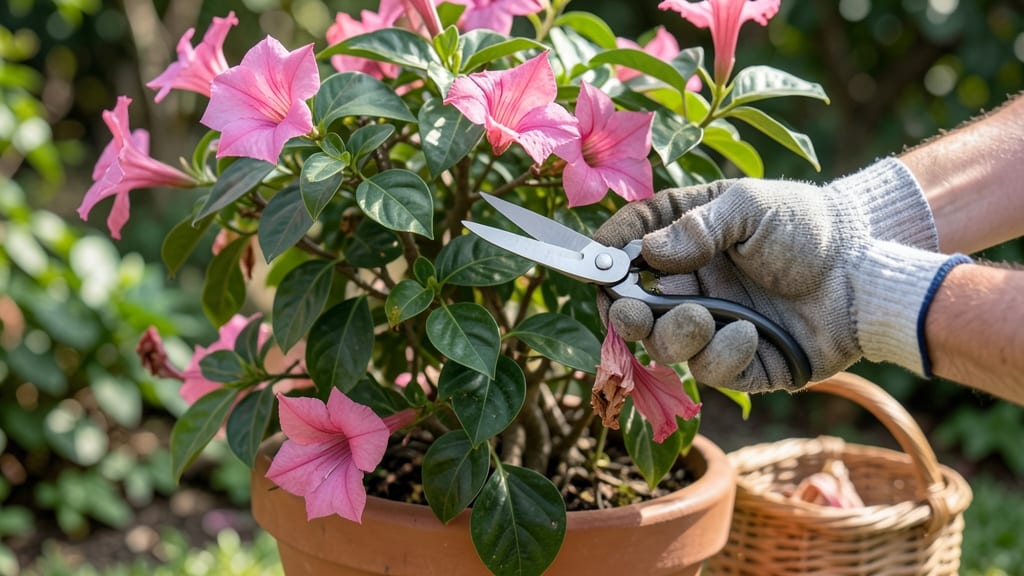
Your Mandevilla’s floral displays could last twice as long—if you deadhead correctly. 🌸 I’ve watched this simple technique turn my struggling vines into a summer-long explosion of trumpet-shaped blooms, and it’s easier than you think.
Deadheading isn’t just about looks—it tricks the plant into focusing energy on new flowers instead of seed production. Grab clean pruners (sharp ones make this 10x faster) and work on a dry morning when the vines are firm.
The key move? Snip just above a leaf node or pair of leaves, never leaving stubs.
You’ll notice the difference within 2-3 weeks: more blooms, longer stems, and vines that stay bushier. The secret weapon? Consistency—check for faded flowers every 5-7 days during peak bloom season. Over-pruning is the only mistake here, but even that’s easily fixed with a little patience.
Bonus tip: Toss spent blooms in your compost (they break down fast) or use them as mulch—your garden’s nutrient cycle will thank you. This method works for both container-grown and in-ground Mandevillas, so no matter where yours lives, you’re set.
📚 In This Guide
- What you need
- Instructions
- Tips and common mistakes
- Wrapping up and next steps
What you need
- ● Pruning shears or sharp bypass pruners – Choose clean, sterilized tools with sharp blades (4-6" blades work best for precision). Quantity: 1 pair.
- ○ Gloves (optional but recommended) – Wear gardening gloves to protect your hands from thorns and sap. Material: Nitrile or leather for durability.
- ● Disinfectant (70% isopropyl alcohol or bleach solution) – Sterilize tools before and after use to prevent disease. Ratio: 1 part bleach to 9 parts water (or use alcohol wipes).
- ● Trash bag or bucket – For collecting spent blooms and clippings. Size: Medium to large (10+ gallons).
- ○ Water spray bottle (optional) – Helps clean tools and rinse off sap after pruning.
- ● Hand pruners (for smaller stems) – If your Mandevilla has delicate vines, smaller pruners (3-4") make close cuts easier.
- ● Rubbing alcohol wipes – Quick tool sterilization between cuts for large batches.
- ● Garden twine or zip ties – If you’re training vines, these help secure them post-pruning.
- ● Compost bin access – Repurpose pruned blooms as nutrient-rich compost!
Step-by-Step instructions for deadheading Mandevilla
Here's the simple method I use to keep my mandevilla blooming nonstop—no fancy tools required.
✂️ Step 1: Identify Spent Blooms and Prepare Your Tools
Start by locating spent flowers—these are the ones that have wilted and dropped petals or turned brown at the edges. Mandevilla blooms often fade to a papery texture when they're ready for removal. Grab your clean, sharp pruners (or even a pair of scissors in a pinch) and give them a quick wipe with rubbing alcohol to prevent spreading disease between cuts.
I like to work in the early morning when the plants are still slightly dewy. The cooler temperatures mean less stress on the vines, and you'll avoid attracting pests that might be drawn to freshly cut stems later in the day. Take a moment to examine the plant's overall shape—this helps you visualize where you'll make cuts for both deadheading and shaping.
✂️ Step 2: Make Clean Cuts at the Right Spots
For each spent bloom, look for the small bump or node just below the flower where the stem meets the vine. This is where new blooms will emerge. Make your cut about ¼ inch above this node, using a slight angle if possible. The angled cut helps water run off the stem and prevents rot. Avoid cutting too close to the node—you want to leave enough stem for new growth to develop.
If you're dealing with a long, leafless stem with multiple spent blooms, don't be tempted to cut it all off at once. Instead, trim just above the lowest remaining leaf node. This encourages the plant to branch out and produce more flowers. You'll see new shoots emerging from these nodes within a few weeks, signaling that your pruning is working.
✂️ Step 3: Shape the Vine for Better Airflow and Light
While you're deadheading, take a moment to assess the vine's overall structure. Mandevilla vines grow quickly, and dense growth can block light and air from reaching the center of the plant. Gently pull back any crowded stems and make cuts to open up the plant. Aim to create a shape that allows sunlight to penetrate to the inner branches—this is where many new blooms will form.
Focus on removing any stems that are growing inward or crossing over each other. You'll know you're on the right track when you can see light filtering through the plant and air circulating freely. This not only encourages more blooms but also reduces the risk of fungal issues. Trim back any leggy growth that's stretching too far from the main plant—these stems often produce fewer flowers and can look unkempt.
💧 Step 4: Water and Fertilize After Pruning
After you've finished deadheading and shaping, give your mandevilla a thorough watering to help it recover from the pruning. Water deeply until you see moisture draining from the bottom of the pot, but avoid creating soggy soil. The goal is to keep the roots hydrated without causing waterlogged conditions that can lead to root rot. Let the top inch of soil dry out between waterings to maintain the right balance.
This is also the perfect time to feed your plant. Use a balanced, water-soluble fertilizer diluted to half strength. I like to fertilize every two weeks during the growing season to encourage vigorous growth and abundant blooms. You'll notice new leaves and buds forming within a few days—this is your signal that the plant is responding well to your care.
☀️ Step 5: Monitor and Repeat Regularly
Deadheading isn't a one-time task—it's an ongoing process that keeps your mandevilla looking its best. Check your plant every few days and remove spent blooms as soon as you spot them. The more frequently you deadhead, the longer your plant will continue to bloom. I find that mandevilla plants that are deadheaded regularly can produce flowers almost continuously throughout the growing season.
Keep an eye out for any signs of stress, such as yellowing leaves or wilting stems. These can indicate that your plant needs more light, water, or fertilizer. Adjust your care routine as needed, and don't hesitate to trim back any overly aggressive growth. With consistent deadheading and proper care, your mandevilla will reward you with a stunning display of vibrant, long-lasting blooms all season long.
Tips & tricks for perfect Mandevilla deadheading
Small details make all the difference when keeping your mandevilla blooming beautifully. Here's what I've learned after years of trimming these showy vines.
Tool Prep is Everything: I can't stress enough how important clean tools are in Step 1. After wiping your pruners with rubbing alcohol, go a step further and sterilize them by dipping in boiling water for 10 seconds. This prevents bacterial spread between cuts, especially if you're working with multiple plants. For extra convenience, keep a small bottle of rubbing alcohol and a pair of scissors in a labeled container near your gardening tools.
The Quarter-Inch Rule: When making those precise cuts in Step 2, use the edge of a quarter as your guide for that ¼ inch above the node. This visual trick ensures consistency every time. I've found that making angled cuts (about 45 degrees) not only helps water run off but also creates a larger surface area for new growth to emerge from the node below.
Light Penetration Test: In Step 3, when shaping your vine, perform this simple test: hold your hand about 6 inches from the center of the plant. If you can't see your fingers through the foliage, there's still too much density. The goal is to create a shape where light can reach all the way to the inner branches—this is where your plant will produce the most flowers. Think of it like opening up a canopy so sunlight can nourish every part of the vine.
Fertilizer Timing: After pruning in Step 4, wait 24 hours before fertilizing. The pruning creates tiny wounds on the stems, and giving them a day to heal first prevents fertilizer burn. I've also noticed that applying fertilizer in the early morning (when you're deadheading) gives the plant a full day to absorb nutrients before evening temperatures drop.
Pro Tips for Deadhead Mandevilla
- Small details make all the difference when keeping your mandevilla blooming beautifully.
- Tool Prep is Everything: I can't stress enough how important clean tools are in Step 1.
- The Quarter-Inch Rule: When making those precise cuts in Step 2, use the edge of a quarter as your guide for that ¼ inch above the node.
Frequently asked questions
Got questions about deadheading your Mandevilla? You’re not alone!
Whether you’re a pruning pro or a first-timer, these common queries can help you keep your vines blooming beautifully. Let’s dive in!
How often should I deadhead Mandevilla?
Deadhead your Mandevilla regularly—ideally every 2–3 days during peak bloom (spring to fall). This encourages continuous flowering by redirecting energy to new buds instead of seed production. If you’re busy, aim for at least once a week to maintain a healthy display.
Is there a best time of day to deadhead?
Morning is ideal! Deadhead in the early morning when the plant is hydrated and temperatures are cooler. This reduces stress on the vine and minimizes the risk of fungal infections. Avoid pruning in the heat of the day or after rain to keep your Mandevilla thriving.
What if I skip deadheading? Will my Mandevilla still bloom?
Yes, but expect fewer flowers and more seed pods. Without deadheading, your Mandevilla will still produce blooms, but energy will shift to seed development, shortening the flowering season. Plus, spent blooms can look messy—so why not keep those vibrant vines looking their best?
Can I use pruning shears or should I pinch by hand?
Both work, but sharp pruning shears are best for clean cuts. For small blooms or delicate stems, pinching with your fingers is fine. Just ensure you’re cutting just above a leaf node or a set of leaves to encourage new growth. Avoid tearing the stem—this can invite pests or disease.
What if it rains right after I deadhead?
No need to panic! A little rain won’t harm your Mandevilla, but avoid deadheading right before a storm to prevent water from sitting in fresh cuts. If possible, wait until the forecast is dry. If rain does occur, just keep an eye on the pruned areas for signs of rot or fungal issues.
Wrapping up and next steps
Deadheading your Mandevilla isn’t just about tidying up—it’s your secret weapon for stunning, long-lasting blooms all season!
By removing spent flowers and pruning strategically, you’ll encourage lush growth, vibrant colors, and a vine that thrives with minimal effort. 🌸 With the right tools and timing, you’re well on your way to a showstopping display that’ll make your garden the talk of the neighborhood.
Now that you’re a deadheading pro, why not take it a step further? Experiment with shaping your Mandevilla—try a trellis, container, or even a cascading look for extra drama. Happy gardening! 🌿