
How To
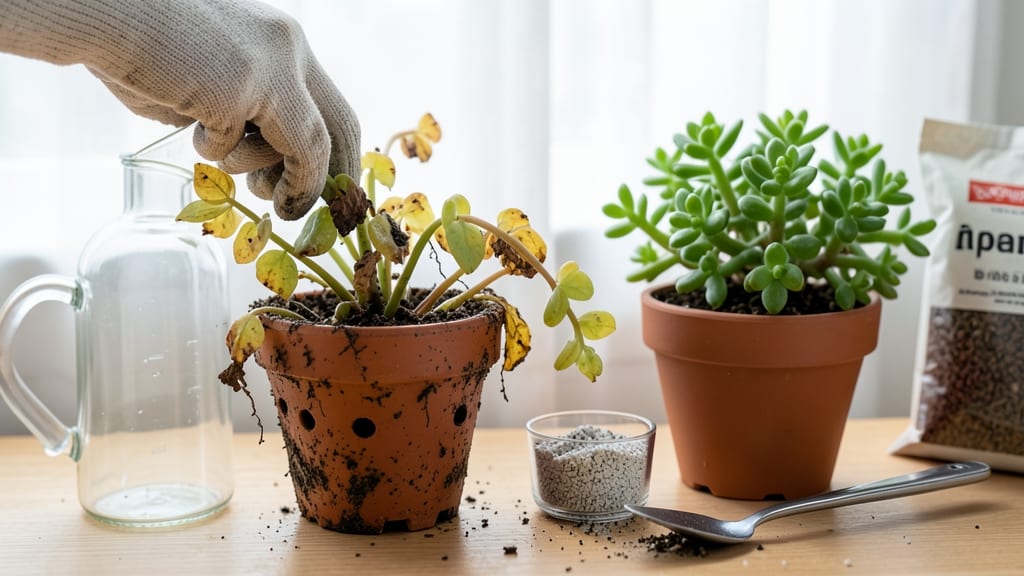
How to fix overwatered String of Pearls—your plant isn’t dead yet, it’s just drowning. 🌱 I’ve revived more soggy succulents than I’d like to admit, and this 3-step rescue works every time. Overwatering turns those plump, pearl-like leaves into sad, mushy messes, but with the right moves, your plant can bounce back stronger than ever.
The first clue? Yellowing leaves or stems that feel soft when you touch them. That’s root rot setting in, and it spreads fast. Grab sharp scissors, cut away the mushy parts (don’t panic—healthy stems stay firm), and let the cuts dry for a day or two.
This isn’t just trimming; it’s giving your plant a fighting chance.
Once you’ve trimmed, repot in fresh, gritty soil—think cactus mix with perlite—and choose a pot with drainage holes (no exceptions). Water lightly only when the top inch of soil is bone-dry, then watch for new growth.
Within weeks, those signature pearls will plump up again, and you’ll forget it ever happened.
Here’s the secret: String of Pearls hates moisture. After recovery, stick to watering every 2-3 weeks and keep it in bright, indirect light. Your plant will thank you with vibrant, healthy stems that’ll have neighbors asking for cuttings. Trust the process—it works.
Root Causes of Overwatering
Your String of Pearls (Senecio rowleyanus) might be drowning in more love than it can handle—and that’s often the root of the problem. Overwatering isn’t just about giving your plant too much water; it’s a mix of environmental factors, human habits, and the plant’s natural needs clashing.
Let’s break down the key reasons why your succulent’s roots might be swimming in a soggy grave instead of thriving in well-draining soil.
Succulents like the String of Pearls are desert dwellers, evolved to store water in their plump, pearl-like leaves. Unlike thirsty houseplants, they hate excess moisture. Here’s why your watering routine might be backfiring:
- Ignoring the "Soak and Dry" Rule: Many gardeners water their succulents on a fixed schedule (e.g., every week), regardless of soil conditions. String of Pearls needs water only when the top 2–3 inches of soil are completely dry. Sticking to a rigid schedule—especially in humid climates or during winter—can lead to root rot.
- Watering Without Checking Drainage: If your pot lacks drainage holes or you’re using a cachepot (decorative outer pot) without emptying the saucer, water pools at the bottom. Succulents cannot survive in soggy conditions; their roots suffocate and rot within 24–48 hours of sitting in water.
- Mistaking Wilting for Thirst: Overwatered String of Pearls often appear wilted or limp—not because they’re dry, but because their roots are drowning. Wilting from overwatering is usually accompanied by yellowing leaves or a mushy stem, not the crisp, plump look of dehydration.
Pro Tip: 💡 Use your finger to test soil moisture. If the top 2 inches feel damp, wait. If it’s bone-dry, it’s time to water—but only until water runs out the drainage holes.
The wrong soil mix is a silent killer for succulents. String of Pearls thrives in fast-draining, aerated soil, but many commercial potting mixes retain too much moisture. Here’s why your soil might be the villain:
- Too Much Organic Matter: Peat-based or garden soil holds water like a sponge, creating a waterlogged environment. Succulents need soil that mimics their natural habitat: 60% mineral grit (like perlite, pumice, or coarse sand) and 40% organic matter (cactus/succulent mix).
- Compacted or Aging Soil: Over time, soil compacts, reducing airflow to roots. This traps moisture and blocks oxygen, leading to anaerobic conditions (no oxygen = root death). Repotting with fresh, gritty mix can revive your plant.
- Lack of Perlite or Pumice: These additives create air pockets, preventing water from pooling. Without them, soil acts like a swamp, suffocating roots.
Quick Fix: ✨ Mix your current soil with 30–50% perlite or pumice to improve drainage. For severe cases, repot into a cactus/succulent blend with added grit.
String of Pearls hails from arid regions where humidity is low and temperatures fluctuate. When you introduce it to a high-humidity environment (like a bathroom or kitchen) or keep it in cool, damp conditions, its water needs change—but your watering habits might not.
- High Humidity Slows Evaporation: In humid air (above 50%), soil stays moist longer, delaying the need for water. If you’re watering on the same schedule as in dry air, the soil stays chronically damp, promoting rot.
- Cool Temperatures Reduce Water Uptake: Succulents grow slower in cooler weather (below 60°F/15°C), so they absorb less water. Watering them as if it’s summer drowns their roots.
- No Airflow = Stagnant Moisture: Poor ventilation (e.g., keeping the plant in a closed terrarium or near other plants) traps humidity around the soil, creating a greenhouse effect that keeps roots wet.
Adjust Accordingly: 🌡️ In humid climates, water every 10–14 days (or when soil is bone-dry). In winter, reduce watering to once a month or less. Ensure airflow with a small fan or open windows.
The pot you choose can make or break your succulent’s health. If your container doesn’t allow for proper drainage or airflow, overwatering becomes inevitable.
- No Drainage Holes: This is the #1 mistake. Without holes, water collects at the bottom, turning the pot into a root-rotting petri dish. Even "self-watering" pots can kill succulents if not used correctly.
- Terracotta vs. Plastic: Terracotta pots wick away moisture (good for succulents), while plastic traps humidity. If you’re using plastic, water even less frequently.
- Cachepots Without Saucer Checks: Decorative outer pots often hide waterlogged soil. Always empty saucers 10 minutes after watering to prevent soggy roots.
Container Upgrade: 🔨 Repot into a terracotta or fabric pot with drainage holes. If using a cachepot, place the inner pot on a layer of pebbles to elevate it above standing water.
Now that you know the real culprits behind your overwatered String of Pearls, the next step is fixing the damage. Stay tuned for our 3-step rescue guide to revive your plant and prevent future disasters!
Fix Your Overwatered String of Pearls
Now that you know the signs and causes of overwatering, it’s time to roll up your sleeves and bring your String of Pearls (Senecio rowleyanus) back to life! The good news? This hardy succulent is resilient—with the right steps, you can nurse it back to health.
Below, we’ve mapped out practical solutions based on the root causes (or symptoms) you’re seeing, along with prevention tips to keep your plant thriving long-term.
Problem: Waterlogged soil cuts off oxygen, leading to root rot and yellowing leaves.
How to Fix It:
- 🔥 Remove the Plant Gently Carefully lift your String of Pearls from its pot. If the roots are mushy or black, they’re rotting—trim them with sterilized scissors (dip in rubbing alcohol first).
- 🍳 Repot in Fresh, Well-Draining Mix
- Use a terracotta pot (breathable!) with drainage holes.
- Fill the bottom ¼ with perlite, pumice, or coarse sand for aeration.
- Add a cactus/succulent mix (or DIY: 60% potting soil + 30% perlite + 10% charcoal).
- ⏰ Let It Dry Out Before Watering Again Wait 7–10 days before watering—only when the top 2 inches of soil are bone-dry.
💡 Prevention Tip:
- Water only when the soil is completely dry (stick your finger in—if it’s damp, wait!).
- Upgrade to self-watering pots with a moisture meter for peace of mind.
Problem: Overwatering weakens leaves, causing them to collapse or drop.
How to Fix It:
- 👨🍳 Trim the Damaged Parts Snip off soft, mushy, or blackened leaves with clean scissors. Healthy leaves should be firm and plump.
- 🌡️ Improve Airflow
- Move your plant to a bright, indirect spot (no direct sun yet—it needs to recover).
- Place a small fan nearby (low setting) to speed up evaporation and prevent fungal growth.
- ✨ Adjust Your Watering Routine
- Water every 3–4 weeks (less in winter).
- Bottom-water (place the pot in a tray of water for 10 mins, then drain) to avoid soggy soil.
💡 Prevention Tip:
- Group succulents together—they create a microclimate with better airflow.
- Avoid misting—String of Pearls hates humidity on its leaves!
Problem: Black, smelly roots mean root rot has set in—act fast!
How to Fix It:
- 🔪 Emergency Root Pruning
- Rinse the roots under cool water to remove old soil.
- Cut off all black/mushy roots—keep only firm, white/tan roots.
- Let the cuttings air-dry for 2–3 days to prevent further rot.
- 🥘 Repot in a Rescue Mix
- Use 100% perlite or coarse sand for the first few weeks to stop moisture buildup.
- Place the pot in a shady spot (no direct sun) for 2 weeks to recover.
- 📊 Monitor Closely
- Wait 4–6 weeks before watering again.
- If new growth appears, gradually reintroduce cactus soil over time.
💡 Prevention Tip:
- Never let your plant sit in saucers of water—always empty excess from the tray.
- Rotate pots occasionally to check for hidden rot.
| Step | Action | Frequency |
|---|---|---|
| Check soil moisture | Stick your finger in—if damp, wait! | Before watering |
| Trim dead leaves | Snip off mushy/black parts | Weekly (if needed) |
| Repot if needed | Switch to well-draining soil/pot | Once (if waterlogged) |
| Adjust light | Bright, indirect light (no scorching) | Permanent change |
| Water less | Only when soil is completely dry | Every 3–4 weeks |
🌟 Pro Tip: If your String of Pearls is severely stressed, propagate the healthy stems! Cut a section with 2–3 pearls, let it dry for a day, then place it on dry soil. New roots will form in 2–4 weeks—free backup plants!
By following these steps, your String of Pearls should bounce back in 4–6 weeks. Once it’s recovered, stick to a consistent care routine to keep it happy and thriving! 🌵✨
Frequently asked questions
How do I know if my String of Pearls is overwatered?
Check for these red flags: yellowing leaves, mushy stems, or a sour smell from the soil. Healthy leaves stay firm and plump, while overwatered ones feel soft or squishy. If the roots look black or mushy when you gently remove the plant, that’s root rot from too much moisture.
Can I save a String of Pearls with black roots?
Yes! Cut off all black/mushy roots with sterilized scissors, then let the remaining healthy roots air-dry for 2-3 days. Repot in 100% perlite or coarse sand for 2 weeks to stop further rot. Place in bright, indirect light and wait 4-6 weeks before watering again.
Why does my String of Pearls wilt when overwatered?
Overwatering causes root rot, which blocks water and nutrient uptake. The plant wilts because its roots can’t absorb moisture—even though the soil feels wet. Unlike underwatering (where leaves wrinkle), overwatered wilting comes with yellow leaves or a soggy stem.
How often should I water after fixing overwatering?
Wait until the top 2 inches of soil are completely dry—this could be every 3-4 weeks in summer or once a month in winter. Use the finger test: stick your finger in the soil. If it’s damp, wait. If it’s bone-dry, water thoroughly until it drains from the bottom.
What’s the best soil mix to prevent future overwatering?
Use a 60% mineral grit (perlite, pumice, or coarse sand) and 40% cactus/succulent mix. This creates air pockets that prevent water from pooling. For extra insurance, add 10% activated charcoal to reduce bacteria. Avoid regular potting soil—it holds too much moisture.