
How To
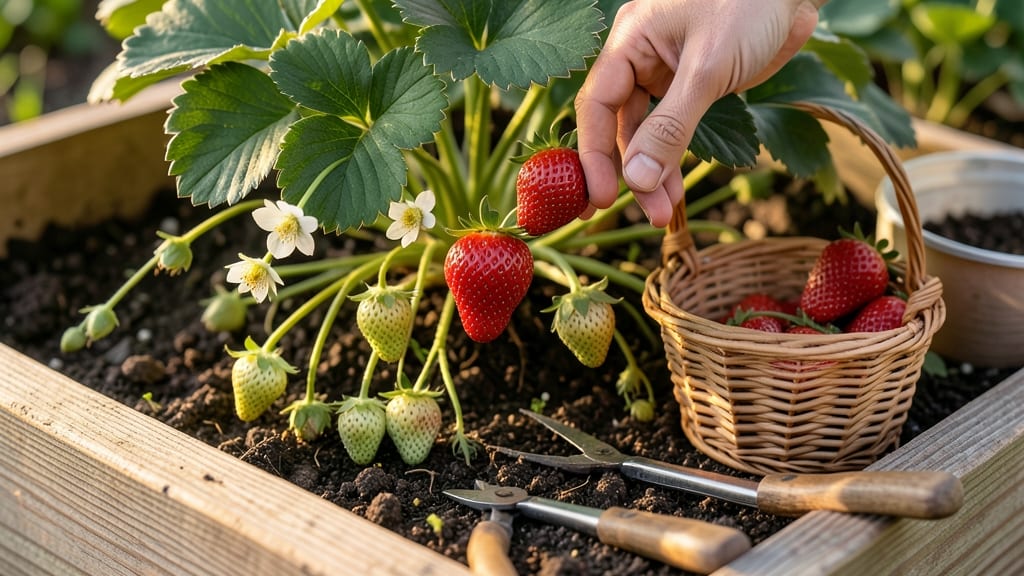
How to know when strawberries are ready to pick can turn a good harvest into a great one—or save you from picking bland, underripe fruit. There’s nothing worse than biting into a strawberry that’s still hard or mealy, especially after all the care you’ve put into growing them.
Luckily, strawberries 🍓 give clear signals when they’re at their peak. From their vibrant color to how they feel between your fingers, these little clues make it easy to tell when it’s time to harvest.
Whether you’re a first-time gardener or just want to improve your technique, understanding these ripeness tests will help you enjoy the sweetest, juiciest strawberries possible.
In this guide, I’ll walk you through the 5 foolproof ways to check if your strawberries are ready—no guesswork required. You’ll learn how to spot the perfect shade of red, test for the right firmness, and even use scent as a secret indicator.
Plus, I’ll share tips to avoid common mistakes that ruin flavor or attract pests.
Ready to transform your garden into a strawberry patch that delivers flavor-packed berries every time? Let’s dive into the simple tricks that’ll have you picking like a pro in no time.
5 Visual and tactile tests to determine strawberry ripeness
Strawberries ripen quickly, so knowing the exact moment to pick ensures you get the sweetest, juiciest berries possible. The key lies in combining visual cues with simple tactile tests—here’s how to master both.
First, examine the color uniformity. Ripe strawberries should be a deep, even red all the way to the base of the cap. Even a tiny patch of green means it needs more time on the vine.
Next, check the cap (hull). When strawberries are ready, the cap will detach easily with a gentle twist—this signals the fruit is fully mature and ready for harvest.
The size and shape also matter. Fully ripe strawberries should be plump and symmetrical, not elongated or shriveled. A slightly glossy surface is another sign of ripeness.
Don’t forget to smell the berry. A ripe strawberry releases a sweet, fragrant aroma near the stem. If it smells bland or sour, it’s not ready yet.
Finally, perform the firmness test. Gently squeeze the berry—it should yield slightly under pressure but not feel mushy. Overripe strawberries turn soft and leak juice when handled.
- 1. Color Check: Uniform deep red (no green or white patches)
- 2. Cap Detachment: Twists off easily with slight pressure
- 3. Size & Shape: Plump and symmetrical, not shriveled
- 4. Aroma Test: Sweet, fragrant smell near the stem
- 5. Firmness: Yields slightly when gently squeezed (not mushy)
For everbearing varieties, like 'Albion' or 'Seascape', ripeness tests are even more critical since they produce fruit in multiple flushes throughout the season. These berries often ripen faster, so check them every 2-3 days.
If you’re growing day-neutral strawberries, like 'Tristar' or 'Ozark Beauty', they’ll continue producing fruit until frost. This means you’ll need to monitor ripeness weekly to avoid missing the peak flavor window.
One common mistake is assuming all strawberries ripen at the same time. In reality, individual berries mature at different rates—even on the same plant. Always check each berry individually for the best results.
For container-grown strawberries, ripeness tests work the same way, but you’ll need to pick more frequently since space is limited. Containers also dry out faster, so ensure your plants get consistent moisture to support even ripening.
Once you’ve mastered these tests, you’ll never waste a single berry again. The difference between perfectly ripe and underripe or overripe strawberries is stunning—your taste buds will thank you!
Best time of day and seasonal factors for optimal picking
Timing matters just as much as technique when picking strawberries. The best time of day to harvest is early morning after the dew has dried but before the sun peaks—this ensures peak sweetness and firm texture.
Strawberries picked in the heat of the day may soften faster or develop a less vibrant flavor.
Seasonal factors also play a role in ripeness. In early spring, strawberries ripen more slowly due to cooler temperatures, while summer varieties mature rapidly when exposed to consistent sunlight.
Evenings with mild temperatures (above 50°F) are ideal for picking, as cooler nights help preserve the berries' natural sugars.
🌱 Pro Tip: If you must pick later in the day, harvest only what you plan to use immediately—strawberries picked in the afternoon won’t store as well.
- 🌅 Early Morning (6-8 AM): Cool temps preserve sweetness and texture
- 🌞 Late Morning (9-11 AM): Dew evaporated, but avoid midday heat
- 🌇 Evening (After 5 PM): Only for immediate use; berries soften faster
Seasonal ripening windows vary by strawberry variety. June-bearing types peak in late June, while everbearing and day-neutral varieties produce fruit in waves from May to August. Pay attention to your plants’ growth cycle—if flowers appear in early spring, expect fruit in 6-8 weeks.
Temperature extremes can trick ripeness cues. If your area experiences unseasonably hot weather, strawberries may ripen faster and lose flavor more quickly. Conversely, cool, cloudy days can slow ripening, so don’t rush to pick if berries aren’t fully red yet.
🌡️ Warning: Avoid picking after a hard rain—wet berries are prone to rot and mold, and water can dilute their flavor.
Finally, plant maturity affects ripeness timing. First-year plants may produce smaller, slower-ripening berries, while established perennial plants yield larger, faster-maturing fruit. If your strawberries aren’t ripening on schedule, check for adequate sunlight (at least 6 hours daily) and proper watering.