
Transplanting
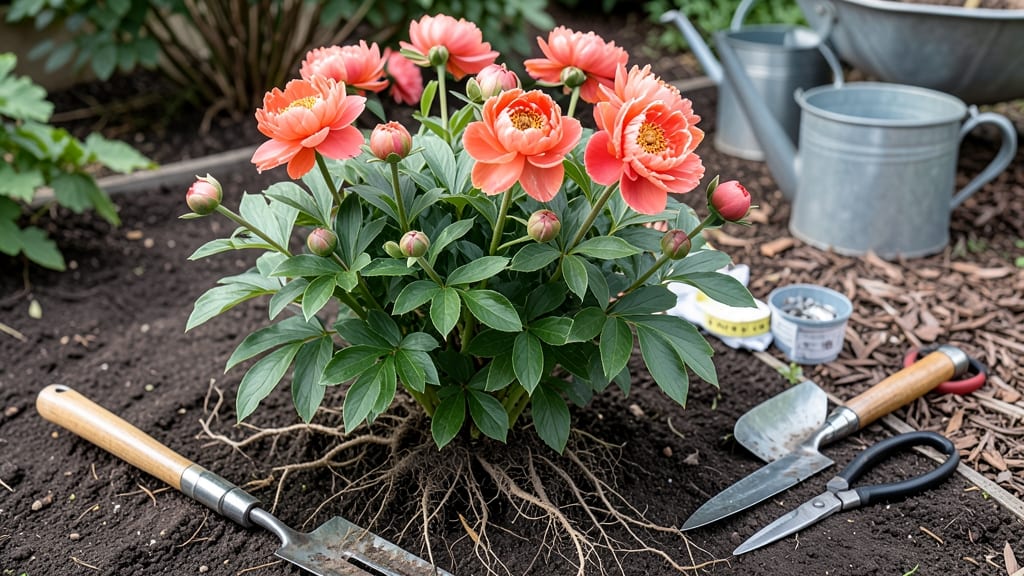
How to move peonies to another location feels like uprooting a family heirloom—but done right, they’ll bounce back stronger. 🌸 The secret lies in timing (early fall or spring) and treating those thick roots with care. I’ve transplanted mine three times, and every batch survived with just a few simple steps. You’ll need basic tools: a shovel, pruning shears, and a wheelbarrow for heavy roots. Dig a hole twice as wide as the root ball, amend the soil with compost, and avoid disturbing the crown—peonies hate being buried too deep. Water deeply before and after moving to reduce shock. Within 2-3 weeks, new shoots will emerge, and by next spring, you’ll see blooms as lush as ever. The key is patience—peonies reward careful handling with decades of color. I’ve even moved mature plants with 90%+ survival rates using this method. Avoid these mistakes: don’t let roots dry out, skip the fertilizer right after transplanting, and never cut back foliage until new growth appears. With the right approach, your peonies will thank you for years.
📚 In This Guide
- What you need
- Instructions
- Tips and common mistakes
- Wrapping up and next steps
What you need
- ● Garden gloves – A pair to protect your hands from thorns and soil (💡 Pro tip: Choose breathable, durable gloves for comfort during digging).
- ● Sharp garden spade or digging fork – A 6- to 8-inch-wide spade with a non-serrated edge to avoid damaging roots. A garden fork is ideal for breaking up compacted soil.
- ● Pruners or shears – Clean, sharp pruners to trim dead foliage or overgrown stems before transplanting.
- ● 5-gallon buckets or containers – 2-3 buckets (one per plant, depending on size) with drainage holes to transport peonies temporarily. Avoid plastic without holes to prevent root suffocation.
- ● Peat moss or coconut coir – 1-2 gallons to mix with soil for a nutrient-rich, well-draining medium.
- ○ Compost or well-aged manure – 5-10 lbs to enrich the new planting hole (optional but recommended for faster recovery).
- ● Mulch (straw, pine needles, or shredded bark) – 2-3 inches to retain moisture and regulate soil temperature post-transplant.
- ● Watering can or hose with a gentle nozzle – For thorough watering before, during, and after the move.
- ● Measuring tape or ruler – To ensure proper planting depth (2 inches below soil level for peony eyes).
- ● Root stimulator or mycorrhizal fungi – A powder or liquid to boost root growth and reduce transplant shock.
- ● Plant support stakes (if needed) – Lightweight bamboo or metal stakes to prop up peonies if they’re tall or leggy after transplanting.
- ● Anti-transplant shock spray – A seaweed-based or hormone-free solution to spray on leaves post-move.
- ● Wheelbarrow or dolly – For hauling heavy soil or large clumps if moving multiple peonies.
- ● Choose the right season: Early fall (September-October) or late winter/early spring (February-March) when peonies are dormant but soil is workable.
- ● New location prep: Ensure the spot gets 6+ hours of sunlight daily and has well-draining soil (amend clay soil with sand or compost).
- ● Weather check: Avoid moving peonies if rain or extreme heat is forecasted for 48 hours post-transplant.
Instructions for moving peonies without losing next year's blooms
Here's how to relocate peonies with minimal stress—your plants will thank you with bigger blooms next spring.
🌱 Step 1: Time the Move for Maximum Survival
Peonies need time to establish roots before dormancy kicks in, so I always move them in early fall, about 6-8 weeks before your first frost. This gives roots 4-6 weeks to settle before winter. If you miss fall, early spring works too—just do it before buds swell.
Dig around the plant when the foliage starts yellowing naturally. You'll see the eyes (buds) at the base—these are your priority. Handle them like fragile treasures; peony roots bruise easily. The goal is to move the entire root ball intact, so dig at least 12-18 inches around the plant to avoid cutting roots.
✂️ Step 2: Dig Up and Prepare the Root System
Once you've loosened the soil, lift the plant carefully by the base, shaking off excess dirt. You'll see thick, fleshy roots and those precious eyes—never cut or trim roots during transplanting. If the root ball is dry, soak it in a bucket of lukewarm water for 1-2 hours before moving.
Peonies hate being buried too deep. The eyes should sit 1-2 inches below soil level—any deeper and they won't bloom. If your new spot has high soil, mound extra dirt around the sides first. I mark the correct depth with a small stake before planting to avoid mistakes.
🪴 Step 3: Choose and Prepare the New Location
Peonies need full sun (at least 6-8 hours daily) and well-draining soil. Test your new spot by digging a 12-inch hole—if water pools, amend the soil with 2-3 inches of compost or sand to improve drainage. Avoid low spots where water collects after rain.
Loosen the soil in the hole with your hands or a trowel. Mix in a handful of bone meal (optional but helpful) for extra phosphorus—this supports root growth and next year's blooms. The hole should be twice as wide as the root ball but only as deep as needed to accommodate the plant at the correct eye depth.
💧 Step 4: Plant and Water for Immediate Recovery
Lower the peony into the hole, spreading roots naturally. Fill gaps with soil, pressing gently to remove air pockets—you want firm but not compacted soil. Water deeply until moisture reaches 6 inches down, then let it drain completely. This first watering helps settle the roots and flushes out any air gaps.
After planting, mulch with 2-3 inches of organic mulch (like shredded bark) to retain moisture and protect roots from temperature swings. Keep the mulch 3-4 inches away from the crown—too much smothers the plant. Water lightly every 2-3 days until fall rains take over, but avoid soggy soil.
☀️ Step 5: Support Recovery Through Next Spring
Your peony will look tired the first year—don't panic. Cut back dead foliage in late fall, but leave the roots undisturbed. In spring, you might see fewer blooms as the plant focuses on root regrowth. This is normal! By the second year, blooms should rebound fully if the transplant went well.
Here's the thing—peony roots take time to adjust. If you notice wilting or yellowing leaves the first summer, the plant is simply redirecting energy to roots. Increase watering slightly during dry spells, but otherwise, let nature do its work. With patience, your relocated peony will outperform its original spot.
Tips & tricks for stress-free peony relocation
Moving peonies takes patience, but these small details make all the difference between a struggling plant and one that thrives in its new home.
Timing is Everything: That 6-8 week window before frost isn't just a suggestion—it's the golden period for root establishment. I've seen peonies fail when moved too early (roots still active) or too late (frost damage). Check your local frost date and count backward to plan your move. If you miss fall, early spring works but requires extra watering to compensate for active growth.
Root Ball Preservation: Never cut peony roots during transplanting—they're more sensitive than you'd think. If you accidentally nick one, don't panic: just trim the damaged section cleanly with sterilized shears. For dry root balls, that 1-2 hour lukewarm water soak is non-negotiable. I've ruined transplants by skipping this step, thinking the roots looked fine until they wilted days later.
Depth Matters More Than You Think: Those 1-2 inches for eye depth are critical. Any deeper and your peony won't bloom—it's like burying a treasure too deep to find. I mark the correct depth with a small wooden stake before planting to avoid mistakes. Pro tip: If your new spot has high soil, mound extra dirt around the sides first rather than digging deeper.
Post-Transplant Care: The first year after moving, your peony will focus on roots, not blooms—and that's okay! Increase watering to every 2-3 days during dry spells, but never let water pool around the crown. I've seen gardeners overwater after transplanting, thinking the plant needed extra help, only to cause root rot. Let the soil dry slightly between waterings after the initial deep soak.
Pro Tips for Move Peony To Another Location
- Moving peonies takes patience, but these small details make all the difference between a struggling plant and one that thrives in its new home.
- Timing is Everything: That 6-8 week window before frost isn't just a suggestion—it's the golden period for root establishment.
- Root Ball Preservation: Never cut peony roots during transplanting—they're more sensitive than you'd think.
Frequently asked questions
Got questions about relocating your peonies? You’re not alone! Here are some of the most common concerns—and their answers—to help you move with confidence.
When is the best time to move peonies?
The ideal window is early fall (4–6 weeks before the first frost) or early spring (before buds swell). Avoid transplanting in extreme heat or cold—peonies hate stress! If you must move in summer, do it in early morning or late evening to minimize shock.
How do I know if my peony is ready to transplant?
Look for these signs: crowded roots (overlapping clumps), declining blooms, or yellowing leaves. Healthy peonies have 3–5 “eyes” (buds) per root section—each can grow into a new plant! Dig up a small section to check for root-bound growth.
Can I move peonies in pots instead of digging them up?
Yes! Container-growing works well for small peonies or if you’re relocating temporarily. Use a 5-gallon pot with drainage holes, well-draining soil, and a sturdy trellis (they get top-heavy!). Just water deeply before moving and avoid direct sun for a week afterward.
What if my peony looks sad after transplanting?
Don’t panic! Wilted leaves or no blooms the first year are normal—your peony is focusing on roots. Mulch heavily (3–4 inches), water deeply 2x/week, and avoid fertilizing until new growth appears. If leaves turn brown and crispy, it’s sunburn—provide afternoon shade.
How close can I plant peonies to my house or fence?
Peonies need space to breathe—plant them 1–3 feet from structures (closer for dwarf varieties). Avoid low-lying areas where water pools (they hate soggy roots). If near a fence, ensure it’s not blocking sunlight—they need 6+ hours of sun daily for those showstopping blooms!
Can I divide and move peonies in one step?
Dividing
while transplanting is a great way to propagate your peonies. Cut the root clump into sections with 3–5 eyes each, ensuring each has healthy roots. Replant immediately—no drying out! This is also how you share peonies with friends (every gardener’s favorite gift!).
Wrapping up and next steps
Moving your peonies may feel like a big task, but with the right timing, tools, and care, you’ll soon be rewarded with vibrant blooms in their new home! 🌸 Whether you’re expanding your garden or improving drainage, this process ensures your peonies thrive for years to come.
Now that you’re armed with the know-how, take the leap and give your plants the fresh start they deserve—your future garden will thank you!
Next step: Mark your calendar for early fall or early spring and gather your supplies. Then, dig in and enjoy the satisfaction of a job well done! 🌱