
Size
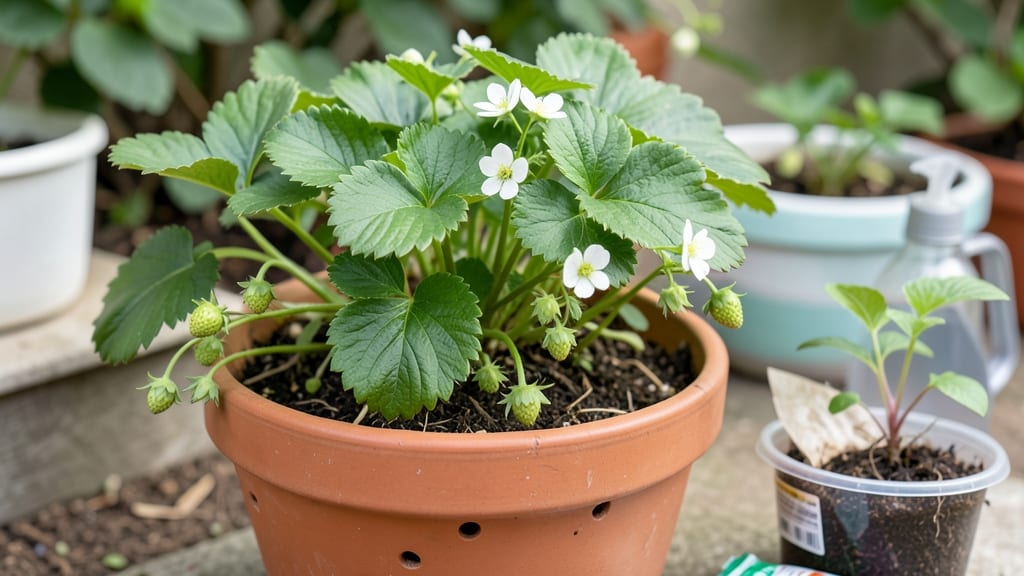
How to grow strawberries in pots indoors means fresh berries year-round, even in a tiny apartment. 🌱 The key is matching their needs to your space—sunlight, airflow, and the right containers. My first indoor batch surprised me with fruit by spring, and I’ve perfected the setup since then.
You’ll need containers with drainage, a well-draining soil mix, and a sunny spot (or grow lights). Strawberries thrive in 5-gallon pots or deeper, with 3-4 inches of soil to support roots. Water when the top inch feels dry, but never soggy—root rot is the silent killer of indoor berries.
By summer, you’ll harvest sweet, plump strawberries that taste better than store-bought. The best part? No weeds, no pests, and no waiting for outdoor seasons. Just fresh fruit whenever you crave it.
Works for any climate, from cold winters to hot summers. Let’s get those plants fruiting indoors—no garden required!
📚 In This Guide
- What you need
- Instructions
- Tips and common mistakes
- Wrapping up and next steps
What you need
- ● Containers: 1–2 large pots (12–14 inches deep) with drainage holes (or a self-watering planter). Pro tip: 💡 Use one pot per plant for better airflow and easier care.
- ● Potting Mix: 5–10 lbs of well-draining, organic potting soil (avoid garden soil—it compacts!). Mix in 1 part perlite or vermiculite per 4 parts soil for aeration.
- ● Strawberry Plants: 3–6 bare-root or potted strawberry plants (choose everbearing or day-neutral varieties like ‘Albion’ or ‘Seascape’ for indoor success).
- ● Fertilizer: A balanced, water-soluble fertilizer (10-10-10 or 5-5-5) or organic options like fish emulsion or compost tea.
- ● Drainage Tray: 1 shallow tray or saucer to catch excess water and prevent root rot.
- ○ Grow Lights (Optional but Recommended): 1–2 full-spectrum LED grow lights (12–16 inches above plants) for 14–16 hours of light/day.
- ● Alternative: A sunny south-facing window (if natural light is strong).
- ○ Mulch (Optional): Straw or shredded leaves to retain moisture and suppress weeds (skip if using a self-watering pot).
- ● Watering Can or Spray Bottle: For gentle, even watering (avoid soggy soil!).
- ● Trowel or Small Shovel: For planting and mixing soil.
- ● Pruning Shears: To trim dead leaves or runners (keep plants tidy!).
- ○ pH Test Kit (Optional): To check soil pH (ideal range: 5.5–6.5 for strawberries).
- ○ Support Stakes (Optional):strong> For heavier varieties like ‘Chandler’ to prevent flopping.
Step-by-step instructions for growing strawberries in pots indoors
Here's how to turn your kitchen windowsill into a year-round strawberry harvest with minimal fuss.
🪴 Step 1: Select the Right Containers and Drainage
Choose 12-inch diameter pots with drainage holes—strawberries hate soggy roots. I prefer terracotta because it breathes, but any container with at least 2 gallons of volume works. If your pot lacks holes, drill them yourself—at least 3 per pot—to prevent root rot. Line the bottom with ½ inch of gravel to create an air pocket and improve drainage.
Don’t skimp on size—strawberries develop long roots. A 5-gallon container can support multiple plants for years. Place a saucer underneath to catch excess water, but empty it after 15 minutes to avoid fungal growth. Here’s the thing—if your pot has no drainage, you’re already setting yourself up for failure. Trust me, I learned that the hard way.
🌱 Step 2: Prepare Soil and Plant Your Strawberries
Fill your pot with a mix of 60% high-quality potting soil and 40% perlite or coarse sand. This ensures aeration and prevents compaction. Strawberries thrive in slightly acidic soil (pH 5.5–6.5), so test your mix—amend with peat moss if needed. Add a slow-release fertilizer (like 10-10-10) at planting time for a 3-month nutrient boost. Press the soil down lightly but don’t compact it—roots need room to breathe.
Plant bare-root strawberries or container-grown plants in early spring. For bare roots, soak them for 1 hour before planting to rehydrate. Dig a hole twice as wide as the root ball and place the plant so the crown sits just above the soil line—burying it invites rot. Space multiple plants 6 inches apart in larger containers. Water deeply right after planting to settle the soil around roots.
☀️ Step 3: Position for Light and Maintain Temperature
Strawberries need 6–8 hours of direct sunlight daily. A south-facing window is ideal, but if yours is dim, supplement with a grow light (LED full-spectrum) 4–6 inches above the plants. Rotate pots quarter-turn weekly so they grow evenly. Without enough light, leaves turn pale, and fruit stays small—you’ll see it within days.
Keep temperatures between 60–75°F. Below 50°F, growth slows; above 85°F, flowers drop. If your home runs hot, place pots on a pebble tray with water to increase humidity slightly. Watch for yellowing leaves—this often means too much heat or not enough water. Adjust accordingly, but don’t overwater; let the top inch of soil dry before watering again.
💧 Step 4: Water and Fertilize for Continuous Harvests
Water deeply 2–3 times weekly, ensuring moisture reaches 4–6 inches down. Use room-temperature water to avoid shocking roots. Mulch with 1 inch of straw to retain moisture and keep soil cool. During fruiting, increase water slightly—3–4 times weekly—but never let soil stay soggy. Overwatering is the #1 killer of potted strawberries.
Feed every 4–6 weeks with a balanced liquid fertilizer (like 20-20-20) diluted to half strength. Stop fertilizing 4 weeks before harvest to avoid bitter fruit. I swear by fish emulsion for organic growers—it’s gentle but packed with nutrients. You’ll notice new leaves and flowers within 2 weeks of feeding if it’s working.
✂️ Step 5: Prune and Harvest for Year-Round Success
Remove weeds and runners regularly—strawberries spread aggressively, and runners drain energy from fruit production. Pinch off the first 5–7 flowers on new plants to encourage stronger root growth. Once established, let them bloom freely. Harvest fully red berries by gently twisting them free—don’t pull, or you’ll damage the plant.
After harvest, trim dead leaves to improve airflow and reduce disease risk. In late fall, reduce watering slightly to signal dormancy, but keep soil lightly moist. With proper care, your potted strawberries will produce two harvests yearly—spring and fall—with occasional winter fruit if you keep lights on 14 hours daily. Real talk: the first harvest is the sweetest payoff after all this effort.
Tips & tricks for perfect indoor strawberry growth
These are the game-changing details that'll help your potted strawberries thrive year-round without the guesswork.
Container Depth Matters: The 12-inch diameter pots aren't just about width—they need to be at least 12 inches deep to accommodate strawberry roots that can grow up to 18 inches long. I've seen people use shallow decorative pots and wonder why their plants struggle. Deeper containers also help maintain stable soil moisture levels, preventing the topsoil from drying out too quickly between your 2-3 weekly waterings. For maximum root space, opt for 5-gallon containers—they'll support multiple plants and produce fruit for years.
Soil Mix Secrets: That 60/40 potting soil to perlite ratio isn't arbitrary—it's about striking the perfect balance between moisture retention and aeration. I've found that adding a handful of worm castings to your soil mix gives an extra nutrient boost without altering the texture. The perlite prevents compaction that would suffocate roots, while the potting soil provides the organic matter strawberries crave. Test your pH before planting; if it's above 6.5, mix in some peat moss to bring it down to that ideal 5.5-6.5 range.
Lighting Strategy: The 6-8 hours of direct sunlight requirement can be tricky indoors, but here's what works: Place your pots on a rotating tray so you can rotate them quarter-turn weekly—this prevents lopsided growth toward the light source. For supplemental lighting, LED grow lights are most efficient, but even a bright shop light can work in a pinch. Position lights 4-6 inches above the plants and keep them on for 14 hours daily during winter months to maintain growth. Watch for pale leaves—this is your first sign you need more light.
Temperature Management: Maintaining that 60-75°F range is crucial, but it's not just about the air temperature—soil temperature matters too. If your home runs cool, place pots on a heat mat set to 65°F to keep roots warm. Above 85°F and flowers will drop, while below 50°F and growth nearly halts. I've found that placing pots on pebble trays with water creates a microclimate that helps maintain humidity, especially helpful in dry indoor environments. The key is consistency—strawberries hate temperature fluctuations more than they hate anything else.
Pro Tips for Grow Strawberries In Pots Indoors
- These are the game-changing details that'll help your potted strawberries thrive year-round without the guesswork.
- Container Depth Matters: The 12-inch diameter pots aren't just about width—they need to be at least 12 inches deep to accommodate strawberry roots that can grow up to 18 inches long.
- Soil Mix Secrets: That 60/40 potting soil to perlite ratio isn't arbitrary—it's about striking the perfect balance between moisture retention and aeration.
Frequently asked questions
Got questions about growing strawberries in pots indoors? You’re not alone! Here are some of the most common concerns—and their easy solutions—to help you crush your indoor strawberry-growing game.
Can I grow strawberries indoors year-round?
With the right setup—like everbearing or day-neutral varieties, 10–12 hours of grow light daily, and consistent warmth (60–75°F)—you can enjoy fresh strawberries anytime. Just avoid drafts and keep humidity moderate to prevent mold. Pro tip: Rotate pots weekly for even light exposure!
How long does it take for indoor strawberries to fruit?
Patience is key! Strawberry plants typically take 3–6 months to produce fruit indoors, depending on the variety and growing conditions. June-bearing types may take longer, while everbearing or day-neutral varieties can fruit faster (sometimes in as little as 2–3 months). Keep temps steady and fertilize lightly every 4–6 weeks to speed things up.
Why aren’t my indoor strawberries sweet or flavorful?
Indoor strawberries often lack sweetness due to low light or over-fertilizing. Boost flavor by:
- Using a full-spectrum LED grow light (12+ hours/day).
- Avoiding high-nitrogen fertilizers—switch to a balanced 10-10-10 or organic option.
- Letting fruit fully ripen on the plant (don’t pick early!).
What’s the best pot size for indoor strawberries?
Size matters! Strawberries need at least 12–18 inches deep and 12+ inches wide per plant (or 2–3 plants per container). Shallow pots restrict root growth, leading to smaller fruit. Drainage is non-negotiable—add a layer of pebbles or perlite to prevent soggy roots. Pro move: Use self-watering pots to keep moisture consistent.
How do I keep pests away from my indoor strawberries?
Indoor pests like spider mites or fungus gnats can still crash your party. Fight back with:
Not ideal! Strawberry plants deplete nutrients and can harbor disease pathogens over time. Refresh your soil with a 50/50 mix of:
Yellow sticky traps near pots catch flying insects—no chemicals needed!
Can I reuse soil from last year’s indoor strawberries?
Disinfect pots with a 10% bleach solution (rinse well) if reusing containers.
Wrapping up and next steps
Growing strawberries in pots indoors isn’t just possible—it’s a delightful way to enjoy fresh, sweet berries anytime! With the right containers, soil, light, and care, you’ll harvest juicy strawberries year-round, even in small spaces.
Don’t let limited outdoor access hold you back—your kitchen or balcony can become a thriving mini-farm! 🌱
Ready to take the next step? Start with just one pot and a few plants, then expand as you gain confidence. Share your progress with fellow plant lovers, and soon, you’ll be rewarded with homegrown goodness—one berry at a time. Happy growing! 🍓✨