
Succulent
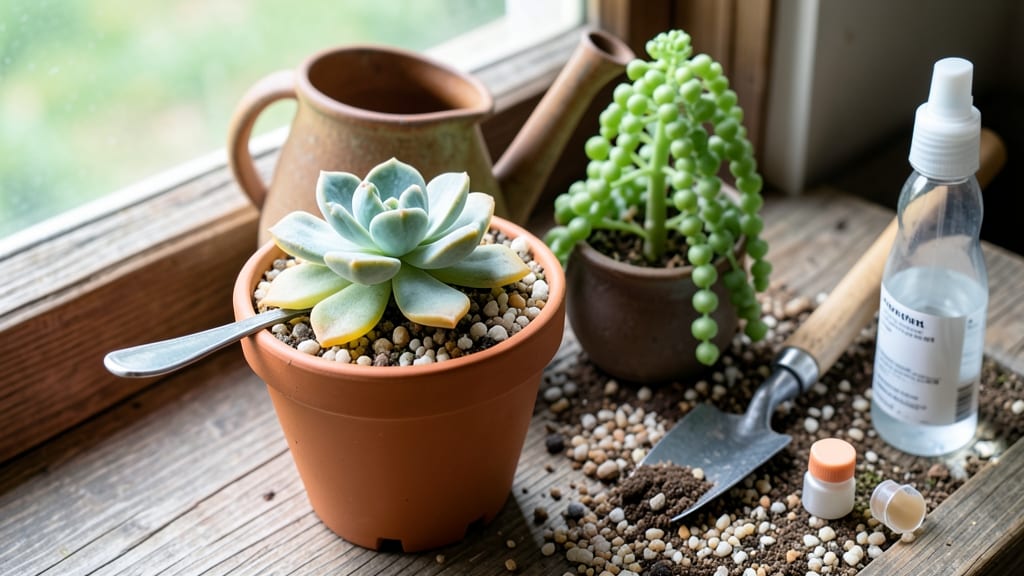
How to help an overwatered succulent with sad, mushy stems doesn’t mean it’s game over. 🌱 I've nursed back more overwatered plants than I'd like to admit, and the secret is acting fast with the right steps—no guilt required. Start by removing the plant from its pot and inspecting the roots. Healthy roots are firm and white, while mushy, black, or smelly roots need trimming. Snip those bad sections with clean scissors, then let the plant air-dry for 24-48 hours to prevent further rot. After drying, repot in fresh, well-draining soil (think cactus mix with perlite) and a container with drainage holes. Water lightly only when the top inch of soil feels completely dry—this is where most people go wrong. With patience, your succulent will bounce back. I've seen plants recover completely within 4-6 weeks when given proper care. The key is consistency, not perfection.
📚 In This Guide
- What you need
- Instructions
- Tips and common mistakes
- Wrapping up and next steps
What you need
- ● Well-draining potting mix: 1 bag (specifically formulated for succulents or cacti, or a blend of 50% potting soil + 50% perlite/pumice). Avoid regular garden soil—it’s a water trap!
- ● Clean pot: 1 (slightly larger than the current pot, with drainage holes). Pro tip: Sterilize with a 1:10 bleach-water mix if repotting.
- ● Tweezers or small pruners: 1 pair (for gently removing mushy leaves or inspecting roots). ✂️ Sanitize with rubbing alcohol first!
- ● Paper towels or newspaper: 2-3 sheets (for blotting excess moisture or wrapping roots during drying).
- ● Spray bottle: 1 (with water—only use when needed! Aim for misting, not soaking.)
- ○ Fungicide (optional but helpful): 1 bottle (like copper fungicide or a homemade baking soda spray: 1 tsp baking soda + 1 quart water + a drop of dish soap).
- ● Rooting hormone: 1 small tube (speeds up recovery for severely damaged roots).
- ● Heat mat: 1 (if your home is chilly—succulents love 70–85°F for recovery).
- ● Humidity dome: 1 (to create a mini greenhouse effect while roots heal).
- ● Calcium hydrogen phosphate: 1 tsp (a slow-release fertilizer to boost strength post-revival).
Step-by-Step instructions for reviving an overwatered succulent
Here's how I rescue succulents from soggy soil—no stress, just action.
🌱 Step 1: Remove the Plant and Inspect Roots
Gently slide your succulent out of its pot using your fingers or a small trowel. You'll see the problem immediately—black, mushy roots or a foul smell means rot has set in. Don't panic yet; this is just the first step in diagnosing the damage.
Shake off excess soil to reveal the root system. Healthy roots are firm and white or tan, while rotten roots are dark, slimy, and crumble easily. Use clean, sterilized scissors to trim away all blackened or mushy roots—this prevents further spread of rot. If more than half the roots are damaged, the plant may need extra care to recover.
💧 Step 2: Let Roots Dry and Callus Over
Place the trimmed plant in a dry, shaded spot for 3-5 days to let the cut roots callus over. This prevents new rot from forming when you replant. I like to prop the plant on a paper towel to encourage airflow around the base.
Check daily for any signs of moisture—if the soil still feels damp, wait longer. The goal is to let the roots harden slightly, which helps them resist future rot. This step is critical; rushing it can undo all your progress. If you're impatient, use a fan on low to speed up drying without damaging the plant.
☀️ Step 3: Repot in Fresh, Fast-Draining Soil
Fill a clean pot—2-3 inches larger than the original—with a cactus/succulent mix (never regular potting soil). Add a layer of perlite or coarse sand at the bottom for extra drainage. This prevents water from pooling around the roots, which is the root cause of overwatering.
Gently place your succulent in the pot, ensuring the callused roots touch the soil. Fill around the base with more soil mix, pressing lightly to secure the plant. Leave a ½-inch gap between the soil and the pot's rim to avoid spills during watering. This setup mimics the plant's natural desert environment, where water drains quickly.
⏰ Step 4: Adjust Watering and Light Gradually
Wait 7-10 days before watering again—this gives the roots time to establish without stress. When you do water, soak the soil thoroughly until water runs out the drainage hole, then let it dry completely before watering again. Overwatering is the enemy here; succulents thrive on neglect, not attention.
Move the plant to bright, indirect light for the first week to reduce stress. After two weeks, you can gradually reintroduce direct sunlight (3-4 hours daily) to help it rebuild strength. Avoid fertilizing for at least 4-6 weeks—the plant needs to focus on recovery, not growth.
🌿 Step 5: Monitor and Prevent Future Issues
Watch for new growth signs—healthy leaves will plump up and turn a vibrant green. If you see wrinkled or yellowing leaves, it’s a sign the plant still needs adjustment. Keep the soil dry and avoid misting the leaves, which can trap moisture and cause rot.
To prevent future overwatering, use a pot with drainage holes and a soil mix designed for succulents. Water only when the soil is completely dry, and consider using a moisture meter if you're unsure. With patience, your succulent will bounce back—and you'll learn the golden rule: less water is always better than more.
Tips & tricks for perfect succulent revival
Real talk: Reviving an overwatered succulent is all about patience and precision—here's what nobody tells you.
Root Inspection: In Step 1, when you're trimming those mushy roots, save the cuttings in a dry container. You can actually propagate these healthy-looking root pieces later—just let them callus over for 2-3 days first. This turns a potential loss into new plants! The key is to work quickly but carefully, as succulent roots are delicate after being disturbed.
Drying Strategy: For the critical 3-5 day drying period in Step 2, I've found that placing the plant on a wire cooling rack (instead of a paper towel) creates even better airflow around the entire root system. Just make sure it's in a completely dry, shaded spot—humidity is the enemy during this phase. If you notice any remaining moisture after 5 days, extend the drying time by another day or two.
Soil Selection: When repotting in Step 3, don't skimp on the perlite or coarse sand layer at the bottom. I recommend using a mix that's at least 50% mineral content (like perlite, pumice, or coarse sand) to ensure proper drainage. This prevents that "wet feet" scenario that originally caused the rot. For extra insurance, you can even add a layer of small pebbles at the very bottom of the pot before adding your soil mix.
Light Transition: The gradual light adjustment in Step 4 is where most people make mistakes. Start with bright, indirect light for that first week—think of it as a recovery room. After two weeks, when you reintroduce direct sunlight, do it gradually: start with just 1 hour per day, then increase by 30 minutes each subsequent day until you reach the full 3-4 hours. This prevents sunburn on the still-fragile leaves.
Pro Tips for Help Overwatered Succulent
- Real talk: Reviving an overwatered succulent is all about patience and precision—here's what nobody tells you.
- Root Inspection: In Step 1, when you're trimming those mushy roots, save the cuttings in a dry container.
- Drying Strategy: For the critical 3-5 day drying period in Step 2, I've found that placing the plant on a wire cooling rack (instead of a paper towel) creates even better airflow around the entire root system.
Frequently asked questions
about reviving overwatered succulents—because even the greenest thumbs need a little help sometimes!How long does it take for an overwatered succulent to recover?
Recovery time varies! With proper care (like letting soil dry out and avoiding water for 1–2 weeks), you might see improvement in 2–4 weeks. Severe cases (mushy stems, black roots) could take months or may not fully bounce back. Patience is key—don’t drown it with extra love (or water)!
Can I save a succulent that’s completely mushy and falling apart?
Maybe! If the stem is still firm at the base and roots are somewhat salvageable (white/firm, not black/slimy), try cutting off healthy leaves and propagating them. Discard the rest to prevent rot. For fully collapsed plants, focus on preventing further damage—sometimes it’s better to compost and start fresh.
What’s the fastest way to dry out overwatered soil?
Move your succulent to a bright, dry spot (like a sunny windowsill) and avoid watering for at least 1–2 weeks. If the pot has drainage holes, prop it up on a wire rack to allow airflow. For stubborn moisture, swap the plant into dry, fresh soil after trimming rotten roots—just don’t water it yet!
Should I use hydrogen peroxide on overwatered succulents?
Yes! Mix 1 part 3% hydrogen peroxide to 4 parts water and use it to water your succulent (sparingly) to kill fungi/bacteria and promote root healing. Do this once every 2 weeks until recovery. Skip it if your plant has open wounds—let those dry out first to avoid stinging.
What if my succulent keeps getting overwatered even after fixing it?
You might need to adjust your routine! Try these fixes:
- Repot into a container with better drainage (terracotta or a pot with holes).
- Use a moisture meter to check soil before watering.
- Switch to a faster-draining mix (like cactus/succulent blend + perlite).
- Water only when soil is bone-dry—stick your finger in 1–2 inches deep!
Wrapping up and next steps
Reviving an overwatered succulent isn’t just about survival—it’s a chance to deepen your green thumb and strengthen your bond with your plants! 🌱 With patience, the right tools, and a little TLC, you’ll see those plump leaves bouncing back to life.
Start by assessing the damage, adjusting your watering habits, and giving your succulent the space it craves.
Now that you’re equipped with the know-how, take action today! Check your other plants for signs of stress, and use this experience to create a thriving, low-maintenance garden. Your succulent’s comeback is just the beginning—happy planting! 🌟