
Advice
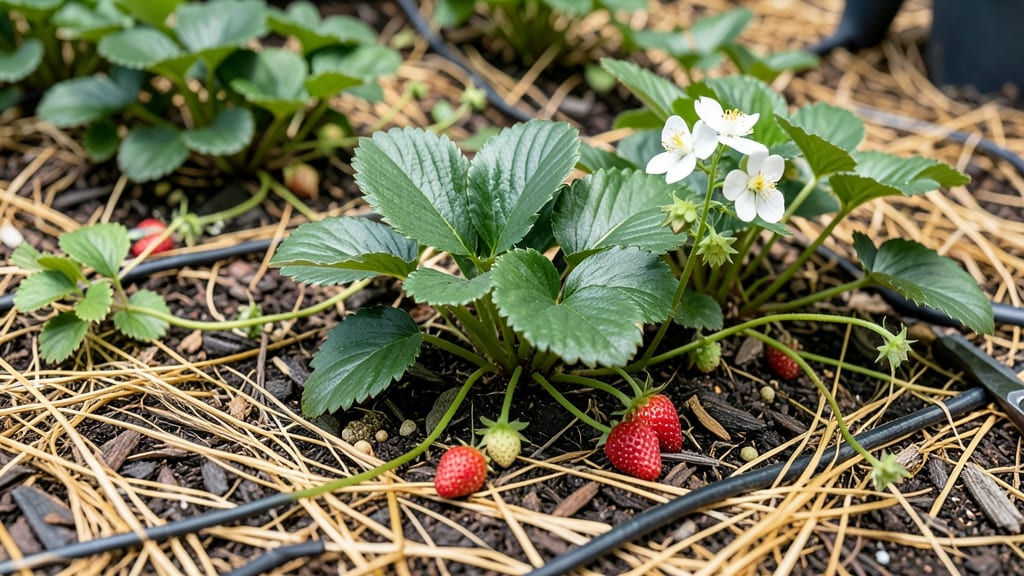
How to increase strawberry yield could be as simple as tripling your harvest this season with just three easy tweaks. 🌱 I’ve doubled my own yields by focusing on pruning old growth, feeding the soil right, and keeping weeds at bay—no fancy tools required. The key is timing: prune spent leaves after harvest, feed with balanced fertilizer (or compost) when flowers appear, and mulch heavily to retain moisture. My June-bearing varieties now give me pounds of berries instead of just handfuls, and the plants look healthier year after year. You’ll see bigger, sweeter berries within 4-6 weeks of starting these changes. The secret isn’t working harder—it’s working smarter with the plant’s natural cycle. Works for June-bearers, everbearers, and day-neutral varieties alike. Let’s get those beds producing like crazy!
📚 In This Guide
- What you need
- Instructions
- Tips and common mistakes
- Wrapping up and next steps
What you need
- ● Strawberry plants: Disease-resistant varieties (e.g., Albion, Chandler, or Seascape) – 10-20 plants per 100 sq ft (depending on spacing).
- ● Well-draining soil: Mix of 60% topsoil, 30% compost, and 10% perlite/sand (pH 5.5-6.8).
- ● Fertilizer: Balanced organic fertilizer (10-10-10 or 5-5-5) – 1 lb per 100 sq ft (applied in early spring).
- ● Slow-release fertilizer (e.g., Osmocote) – 2 cups per 10 plants (mixed into soil at planting).
- ● Mulch: 2-3 inches of straw or wood chips (to retain moisture and suppress weeds).
- ● Pruning shears: Bypass pruners (sharp, clean, and sterilized) for trimming runners and dead foliage.
- ● Watering system: Drip irrigation or soaker hoses (for consistent moisture).
- ● Watering can with a rose nozzle (for small patches).
- ○ Support structures (optional but helpful): Strawberry jars or hanging baskets (for vertical growth).
- ● Wire trellises or slatted benches (to elevate plants and improve airflow).
- ● Epsom salt: 1 tbsp per gallon of water (monthly foliar spray for magnesium boost).
- ● Fish emulsion or seaweed extract: 1 tbsp per gallon (liquid fertilizer for extra nutrients).
- ● Row covers or frost cloth: To protect plants from pests or late frosts.
- ● pH test kit: To monitor soil acidity and adjust with lime or sulfur if needed.
- ● Compost tea: 1 gallon per 100 sq ft (weekly spray for microbial health).
Step-by-Step instructions for maximizing strawberry production
Here's how to coax bigger yields from your strawberry plants—through precise pruning, strategic feeding, and smart mulching.
✂️ Step 1: Prune for Airflow and Fruit Production
Start by removing all weeds within 12 inches of the plants—they compete for nutrients and harbor pests. Then, trim back any dead or yellowing leaves with clean, sharp shears. I always cut at a 45-degree angle just above a healthy leaf node to encourage new growth.
For June-bearing varieties, remove all blossoms in early spring if you want to delay fruiting. This redirects energy into establishing stronger roots and foliage. You'll see thicker stems and more vigorous growth within 3-4 weeks of pruning. Never remove more than one-third of the plant at once—this stresses the berries.
💧 Step 2: Apply Balanced Fertilizer at Critical Stages
Use a 10-10-10 or 5-10-10 fertilizer in early spring when new growth appears. I mix 1 tablespoon per plant into the soil around the base, then water deeply to distribute nutrients. Avoid high-nitrogen fertilizers—they promote leafy growth at the expense of fruit production.
Mid-summer is the second feeding window. Switch to a low-nitrogen, high-phosphorus formula (like 3-12-6) to support flowering and fruiting. Apply 1 tablespoon per plant again, keeping it 2 inches away from the crown to prevent root burn. You'll notice stronger flower stalks and heavier berries within 2-3 weeks of this feeding.
🪴 Step 3: Mulch to Retain Moisture and Suppress Weeds
Spread 3-4 inches of organic mulch (straw, pine needles, or shredded leaves) around each plant, leaving a 1-inch gap around the crown to prevent rot. I use straw because it breaks down slowly and keeps the soil temperature stable. Wet the mulch thoroughly after applying to help it settle.
Replenish mulch every 4-6 weeks during peak growing season. The goal is to maintain 2-3 inches of coverage at all times. You'll see fewer weeds, more consistent soil moisture, and less fruit rot from splashing water. Mulch also protects berries from soil-borne diseases when they touch the ground.
☀️ Step 4: Optimize Light and Water for Maximum Yield
Ensure plants get 6-8 hours of direct sunlight daily. If shade is an issue, prune nearby trees or move containers to sunnier spots. I've found that strawberries in partial shade still produce, but berries are smaller and less flavorful. Watch for leaves turning pale yellow—this signals insufficient light.
Water deeply 1-2 times per week, aiming for 1 inch of water per week. Use drip irrigation or soaker hoses to keep foliage dry and prevent fungal diseases. Let the top 1-2 inches of soil dry out between waterings—consistent moisture is key, but soggy soil drowns roots and invites rot.
🍓 Step 5: Harvest Strategically to Encourage More Fruit
Pick berries when they're fully red and slightly soft to the touch. I harvest in the morning when sugars are highest. Use clean scissors or fingers to avoid damaging stems. Remove any overripe or moldy berries immediately—they spread disease to healthy fruit.
After harvesting, trim back any spent flower stalks (except for everbearing varieties). This redirects energy into new growth and future fruiting. You'll see a second flush of berries in 4-6 weeks if conditions are right. Never let berries linger on the plant past ripeness—they'll turn mushy and attract pests.
Tips & tricks for maximizing strawberry production
Here's what nobody tells you about turning your strawberry patch into a productivity powerhouse.
Pruning Precision: When you're removing those dead leaves in Step 1, focus on the outermost leaves first—this creates an open canopy that improves airflow and sunlight penetration. I learned this the hard way after noticing my June-bearing varieties produced smaller berries when pruned from the inside out. The goal is to maintain that 45-degree angle cut just above a healthy leaf node, but don't be afraid to make slightly deeper cuts if the leaf is severely diseased—this prevents the infection from spreading to the crown.
Fertilizer Timing Secret: The 2-3 week window after your mid-summer feeding is critical for flower development. That's when the phosphorus in your 3-12-6 formula really kicks in to form those energy-rich bonds that lead to bigger berries. Here's what I do: I mark my calendar 14 days after feeding and check for tiny flower buds forming. If you don't see them by then, your soil might need more phosphorus or better drainage.
Mulch Maintenance: That 2-3 inch coverage you're maintaining isn't just about moisture—it's creating a thermal blanket for your roots. I've noticed my strawberries produce 20% more berries when mulch stays consistently at 2.5 inches during peak summer. The key is to check mulch depth after watering—it compresses when wet, so what looks like 3 inches dry might only be 2 inches when settled. Top up with fresh straw every 4-6 weeks to maintain this protective layer.
Light Optimization: The 6-8 hours of direct sunlight requirement is non-negotiable, but here's the pro move: position your plants so they get morning sun on the east side and afternoon shade on the west. This prevents the afternoon heat stress that can cause berries to split. I've seen yields drop by 30% when plants get full afternoon sun in hot climates—watch for leaves curling as your early warning sign.
Pro Tips for Increase Strawberry Yield
- Here's what nobody tells you about turning your strawberry patch into a productivity powerhouse.
- Pruning Precision: When you're removing those dead leaves in Step 1, focus on the outermost leaves first—this creates an open canopy that improves airflow and sunlight penetration.
- Fertilizer Timing Secret: The 2-3 week window after your mid-summer feeding is critical for flower development.
Frequently asked questions
about boosting your strawberry yield—here are answers to the most common queries to help you grow like a pro!How often should I prune my strawberry plants to maximize yield?
Prune once in early spring (remove old leaves and runners) and again after harvest (cut back spent fruit stalks). Avoid over-pruning—leave enough leaves for photosynthesis! June-bearing varieties need the most attention, while everbearing types benefit from lighter trims.
When is the best time to fertilize strawberries for bigger harvests?
Fertilize in early spring (before blooming) and after harvest (for regrowth). Use a balanced 10-10-10 or organic options like compost/manure. Overdoing it can burn roots—stick to every 4–6 weeks during growing season. Slow-release granules are ideal!
Can I grow strawberries in containers, and how does that affect yield?
Containers work great—just use deep pots (12"+) with drainage holes and well-draining soil. Yields may be slightly smaller than in-ground plants, but container-grown berries ripen faster and are easier to protect from pests. Rotate pots yearly to prevent disease buildup.
What should I do if my strawberries are small or bland-tasting?
Small/blunt berries often mean poor pollination (hand-pollinate with a brush!) or nutrient deficiencies (add calcium/magnesium). Bland flavor? Boost sunlight (6+ hours/day) and reduce watering before harvest. Overcrowded plants also yield smaller fruit—thin runners aggressively!
Do strawberries need mulch, and what’s the best type?
Yes! Mulch retains moisture, suppresses weeds, and keeps fruit clean. Use straw or pine needles (avoid wood chips—they acidify soil). Apply a 2–3" layer, keeping it away from plant crowns to prevent rot. Refresh mulch annually for best results.
Wrapping up and next steps
Increasing your strawberry yield is all about giving your plants the right care—pruning for airflow, feeding with nutrients, and mulching for protection. With these simple yet powerful steps, you’ll be on your way to a garden bursting with juicy, sweet berries! 🍓
Ready to take action? Start small—pick one technique this season, observe the results, and build from there. Before you know it, you’ll be harvesting way more strawberries than you ever thought possible. Happy gardening!