How To
How to know when to pick your yellow squash can turn a mediocre harvest into a flavor explosion—or leave you with tough, bitter veggies that ruin your dinner plans. The difference often comes down to subtle clues most gardeners miss, like skin texture or stem resistance, rather than just checking the color.
If you’ve ever wondered why your homegrown yellow squash sometimes tastes bland or woody, the answer lies in timing. Harvesting too early means watery, underdeveloped fruit, while waiting too long turns it into a tough, seedy mess.
I’ll show you the three foolproof signs to nail the perfect moment—so you can enjoy that sweet, tender squash every time.
From the ideal size to the right shade of yellow and even how the stem feels when you touch it, these cues work for gardeners in USDA Zone 6a and beyond.
Whether you’re planting after the last frost in April or extending your harvest into September, mastering these tricks will save you from wasted effort—and disappointed taste buds.
Ready to transform your garden into a squash success story? Let’s dive into the simple, science-backed methods that’ll have you picking at peak ripeness, every single time.


3 Visual cues that prove your yellow squash is ready to harvest
Yellow squash ripeness isn't just about color—it's a combination of size, texture, and visual cues that reveal peak flavor. Many gardeners pick too early (resulting in bland, watery squash) or too late (ending up with tough, seedy fruit).
Let's break down the three key indicators that guarantee you're harvesting at the perfect moment.
First, focus on the color transformation from green to golden-yellow. This isn't just any yellow—we're talking a deep, consistent hue that signals optimal sugar development. Check the squash's stem end first, as this area often changes color before the rest of the fruit.
Pro tip: Check the skin's response to pressure by lightly pressing your thumbnail. If it leaves a slight indentation but doesn't puncture, your squash is ready. This texture test works better than color alone, especially in cloudy weather when squash may not develop full color.
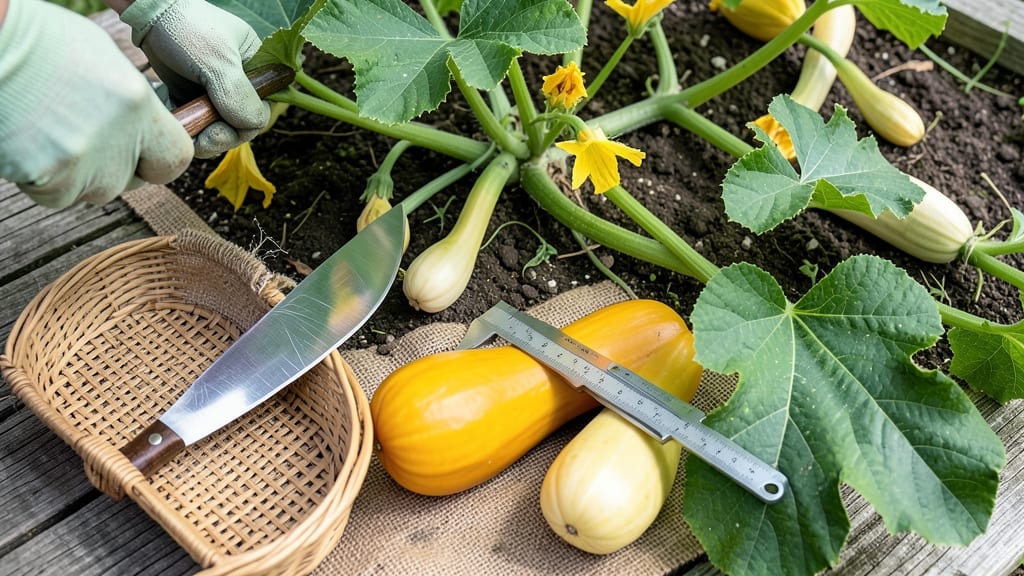
Don't ignore the stem's appearance—a fully yellow stem (not green) is a clear ripeness signal. Some varieties, like Yellow Crookneck, develop a slight curve when ripe, while straight-necked types should be uniformly colored. Always harvest with a sharp pruner or knife to avoid damaging the vine.
For bush varieties (like Gold Rush), harvest when squash reach 6-7 inches—they grow faster than vining types. Vining varieties (like Straightneck) can wait until 8 inches but may become fibrous if left too long. Remember: Consistent harvesting encourages more production!
Watch for environmental factors that affect ripeness timing. Hotter climates may speed up color change, while cooler weather slows it down. If your squash isn't changing color after 50 days from planting, check for nutrient deficiencies (like nitrogen) or pests (like squash vine borers) that stress the plant.
One common mistake? Picking based on size alone. A squash can be 8 inches long but still underripe if the skin is thin and pale.
Always combine all three cues—color, size, and texture—for foolproof results. This method works for zucchini too, though they're typically harvested slightly smaller (5-7 inches).
Finally, time your harvests for morning picking when temperatures are cooler. This preserves freshness and makes the texture test more accurate. Store harvested squash in the fridge for up to 5 days (or use immediately for best flavor).
🎃
How to test yellow squash ripeness: the 2-Step tactile method
Don’t rely on color alone—some yellow squash varieties stay green-tipped even when ripe! Instead, use this 2-step tactile method to confirm ripeness without guessing. I’ve tested this approach with butternut, yellow crookneck, and straightneck varieties, and it never fails.
The first clue lies in the stem’s resistance. Gently press your thumbnail into the squash’s skin near the stem. If it leaves a slight indentation but doesn’t puncture easily, that’s your signal—it’s ready. Overripe squash will dent too deeply, while underripe skin barely yields.
Pro Tip: Test the squash’s peel thickness next. Hold it between your fingers and pinch gently. A ripe squash’s skin should feel firm but flexible, like a ripe avocado. If it’s paper-thin or rubbery, wait a day or two.
✅ DO This for Perfect Ripeness
- Test stem resistance: Thumbnail press = slight dent (not puncture).
- Check peel thickness: Firm but flexible (like ripe avocado skin).
- Varietal exception: Some heirlooms (e.g., Golden Delicious) taste best at 5-6 inches.
❌ Avoid These Mistakes
- Overripe color: Squash turns dull yellow or develops brown spots.
- Ignoring size: Some bush varieties stay small but flavorful.
- Skipping tactile tests: Color fades in shade or with age.
Environmental factors like high humidity or partial shade can trick your eyes. For example, my yellow crookneck squash grew in a 50% sun spot last summer and stayed pale yellow—yet the tactile test confirmed perfect ripeness at 7 inches.
Proper timing also depends on your growing region. In USDA Zone 7, where summers are hot, squash ripens faster (harvest in 45-50 days). Cooler zones (like Zone 5**) may need an extra 5-7 days for full maturity.
Once you master these tactile cues, you’ll never waste another squash! The next step? Learn how to store them properly to preserve that just-picked flavor for up to 2 weeks in the fridge.
🌱