
Blooming
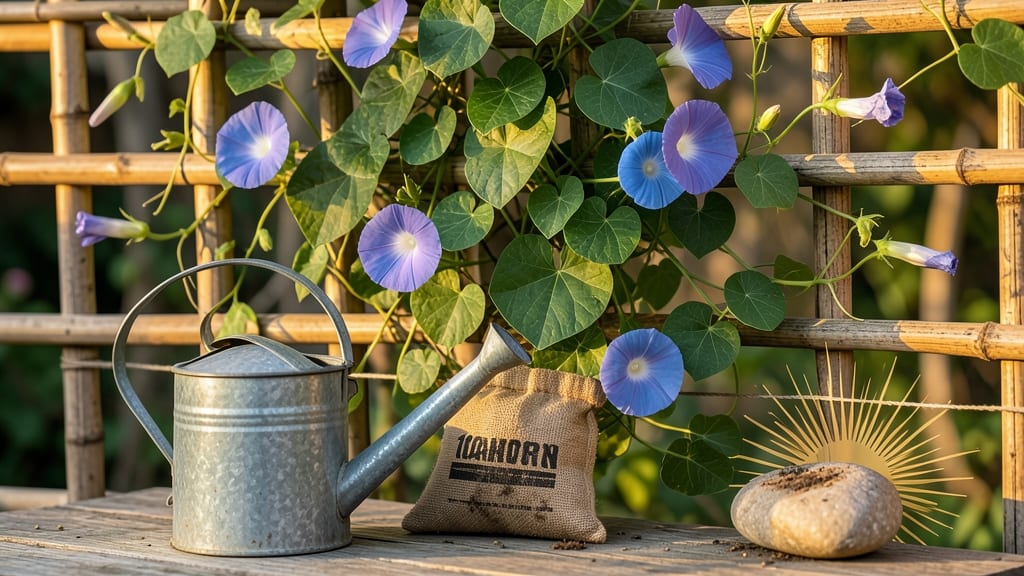
Morning glories refuse to bloom? The secret isn't hidden—it's sunlight. ☀️ I’ve turned my once-sleepy vines into a nonstop floral display by mastering just a few tricks that most gardeners overlook.
These twining beauties need more than just good intentions; they demand the right balance of light, support, and care to keep producing those iconic trumpet-shaped blooms all season long.
The first rule? Full sun is non-negotiable—at least 6-8 hours daily—but not the harsh midday glare that wilts tender leaves. Morning sun and afternoon shade work best, especially in hot climates.
Pair that with a strong trellis or fence—morning glories climb aggressively, and unsupported vines sprawl, wasting energy on leaves instead of flowers. A simple 5-foot tall wire trellis does the trick for me.
Watering and feeding make all the difference too. Keep soil consistently moist but never soggy—drought stress forces plants to focus on survival, not blooms. A balanced fertilizer (like 10-10-10) every 4-6 weeks keeps them flowering like crazy.
And here’s the game-changer: deadhead spent blooms daily—it’s the only way to coax more flowers instead of seed pods. Within weeks, you’ll have vines heavy with blooms from spring until frost.
Even in small spaces, morning glories thrive—containers, balconies, or vertical gardens all work. The key is adapting the sunlight tricks to your setup. Start with these basics, and you’ll have a vine-covered floral wonderland that neighbors will envy. Ready to transform those lazy vines into a blooming machine?
📚 In This Guide
- What you need
- Instructions
- Tips and common mistakes
- Wrapping up and next steps
What you need
- ● Morning glory seeds – Choose fast-growing varieties like ‘Heavenly Blue’ or ‘Scarlet O’Hara’ (1–2 packets, ~50–100 seeds).
- ● Well-draining potting mix – Lightweight, organic soil (5–10 lbs, or enough to fill your containers).
- ● Containers or garden bed – Containers: 5–10-inch deep pots (3–5 plants per pot) with drainage holes.
- ● Garden bed: Full sun exposure (6+ hours/day) and loose, fertile soil.
- ● Watering can or hose with a gentle spray nozzle (to avoid disturbing seedlings).
- ● Fertilizer – Balanced, water-soluble fertilizer (10-10-10 or 5-10-10 NPK ratio, 1 tbsp per gallon of water).
- ● Trellis, fence, or stakes – At least 6–8 feet tall for vining support (bamboo or metal works best).
- ● Pruning shears – Sharp, clean scissors for trimming (sterilize with rubbing alcohol).
- ● Mulch – Straw or shredded leaves to retain moisture and suppress weeds.
- ● Epsom salt – 1 tbsp per gallon of water (monthly) for magnesium boost.
- ● Grow lights – LED bulbs (5000–6500K) for seedlings if natural light is limited.
- ● Plant markers – Label tags to track varieties (if growing multiple types).
- ● Compost or worm castings – 1 cup per plant for extra nutrients.
Step-by-step instructions for encouraging morning glory blooms
Morning glories reward precise care with dramatic, sunlit displays—here's how to trigger that bloom magic.
☀️ Step 1: Position for Maximum Sunlight
Morning glories need 6-8 hours of direct sunlight daily, but they're picky about timing. Plant them where they'll receive morning sun and afternoon shade in hot climates—this prevents leaf scorch while ensuring those critical bloom triggers. I always check the sun path through my yard first; even a few hours of afternoon shade makes a difference in bloom volume.
The ideal spot is near a south-facing fence or trellis where they'll climb upward into sunlight. If your yard lacks natural shade, use a light-colored trellis to reflect extra warmth onto the vines. Watch for leaves turning yellow or crispy edges—that's your signal to adjust their position or provide afternoon shade with a sheer curtain.
💧 Step 2: Water Deeply but Strategically
Morning glories despise soggy roots but need consistent moisture to set blooms. Water deeply 2-3 times per week until the top 4-6 inches of soil feel damp. I use a moisture meter to check—when it reads dry at 2 inches, that's my cue. Overwatering stresses the plants, while underwatering causes buds to drop before opening.
Here's the trick: water at the base in the morning. This gives roots time to absorb moisture before evening, reducing fungal risks. If your soil drains poorly, add 2-3 inches of compost to improve aeration. You'll know you're doing it right when new leaves emerge with a vibrant green color and no wilting.
✂️ Step 3: Prune to Encourage Blooming
Morning glories bloom best when you prune aggressively. After the first flush of flowers, cut back one-third of the vine length right above a leaf node. This shock treatment forces the plant to produce new shoots that will bloom more prolifically. I always use clean, sharp pruners to avoid damaging the stems.
Deadhead spent blooms immediately—they won't rebloom on their own. Pinch off faded flowers by twisting them off with your fingers, which also encourages side shoots to form. If your vines get too leggy, trim them back to 12-18 inches from the base. You'll see new growth within 7-10 days, and that's when the real bloom show begins.
🌿 Step 4: Feed for Continuous Blooms
Morning glories are light feeders, but a mid-season boost keeps them flowering. Mix ½ cup of 10-10-10 fertilizer into the soil around the base in early summer, then water deeply. I also top-dress with 1 inch of compost every 4-6 weeks to provide slow-release nutrients. The key is balance—too much nitrogen makes them grow leaves instead of flowers.
Watch for dark green, lush foliage with sparse blooms—that's your sign to reduce nitrogen. Instead, focus on phosphorus and potassium by switching to a 5-10-10 formula for the next feeding. You'll notice buds forming within 2-3 weeks of proper feeding, and the blooms will stay vibrant longer.
🪴 Step 5: Support Vines for Better Airflow
Morning glories climb aggressively, and crowded vines lead to fewer blooms. Use a 6-foot trellis or sturdy fence to give them room to sprawl. I weave the vines through the trellis as they grow, which also encourages upward growth and better exposure to sunlight.
If your plants are already tangled, gently untwine them and redistribute them evenly. This improves airflow, reducing humidity around the leaves and preventing fungal diseases like powdery mildew. You'll see stronger stems and more blooms when the vines aren't competing for space. Add a few extra tie-downs if your area gets windy—the last thing you want is a snapped vine mid-bloom season.
Tips & tricks for perfect morning glory blooms
These sunlight secrets will transform your morning glories from modest vines into a nonstop floral spectacle.
Light Positioning Precision: The 6-8 hours of morning sun is non-negotiable—morning glories are light-sensitive and bloom in response to sunlight patterns. If you notice buds forming but not opening, your plants might be getting too much afternoon sun. Try moving them slightly eastward or adding temporary shade cloth after 10 AM. I've seen dramatic differences when I adjust positioning just 2 feet closer to the east-facing wall.
Watering Technique: The 1-1.5 inches per week guideline is perfect, but timing matters more than you'd think. I water right at sunrise when evaporation rates are lowest, and the soil absorbs moisture without stressing the plants. Pro tip: Use a rain gauge or tuna can to measure your water output—eyeballing it often leads to either soggy soil or underwatering. The damp 2-3 inches down check is your best indicator of proper moisture levels.
Pruning Strategy: When you prune back to 6-8 inches in early spring, you're essentially giving your plants a fresh start. I always use sterilized pruners and make clean cuts just above leaf nodes—this prevents disease entry points. For daily deadheading, I've found that using your thumb and forefinger to pinch stems works just as well as pruners, and it's faster when you're checking dozens of blooms. The 5-minute morning check becomes a meditative ritual that keeps your plants producing continuously.
Support System: That 6-foot trellis isn't just decoration—morning glories can grow 10-15 feet in a season if left unchecked. I've learned the hard way that flimsy supports collapse under the weight of blooms. Galvanized wire mesh is my go-to because it's sturdy yet flexible enough to guide the vines naturally. Train vines by gently coiling them around the trellis as they grow—this prevents stem damage that can occur when you force them through rigid structures.
Pro Tips for Make Morning Glories Bloom
- These sunlight secrets will transform your morning glories from modest vines into a nonstop floral spectacle.
- Light Positioning Precision: The 6-8 hours of morning sun is non-negotiable—morning glories are light-sensitive and bloom in response to sunlight patterns.
- Watering Technique: The 1-1.5 inches per week guideline is perfect, but timing matters more than you'd think.
Frequently asked questions
about growing vibrant morning glories—because even the most enthusiastic gardeners need a little extra help! Here are answers to the most common questions to keep your vines blooming beautifully.How long does it take for morning glories to bloom after planting?
Morning glories are fast growers! With the right care—like full sun (6+ hours daily) and consistent moisture—they typically start blooming 4 to 6 weeks after planting seeds. If you’re starting indoors, expect flowers in 3 to 4 weeks after transplanting. Patience pays off with those stunning trumpet-shaped blooms!
Why aren’t my morning glories blooming, even though they’re growing?
If your vines are lush but flower-free, check these common culprits:
- Not enough sunlight: Morning glories crave direct sun—move them to a sunnier spot or add a grow light.
- Over-fertilizing: Too much nitrogen = leafy growth, not flowers. Use a low-nitrogen, high-phosphorus fertilizer instead.
- Stress from heat/drought: Keep soil moist but not soggy, especially in hot climates.
Can I grow morning glories in containers or hanging baskets?
Morning glories thrive in containers as long as the pot is at least 12 inches deep and has drainage holes. Hanging baskets are perfect for their trailing habit—just ensure the container gets plenty of sunlight and water regularly. Bonus: They add a dramatic vertical pop to patios or balconies!
Do morning glories bloom all day, or just in the morning?
While their name suggests morning-only blooms, many varieties (like ‘Heavenly Blue’ or ‘Fountain of Youth’) actually stay open for most of the day, especially in warm weather. Cooler mornings may cause them to close briefly, but they’ll reopen by midday. Pro tip: Deadhead spent blooms to encourage more flowers!
Are there morning glory varieties that bloom nonstop?
Yes! Some varieties are bred for longer bloom cycles, like:
For nonstop action, plant a mix of varieties to extend your blooming season from spring to frost.
Wrapping up and next steps
Growing vibrant morning glories is all about patience, the right conditions, and a little know-how—but trust us, the effort is worth it! With the perfect balance of sunlight, support, and consistent care, you’ll be rewarded with a cascade of stunning blooms that seem to never stop. 🌸
Ready to turn your garden into a morning glory paradise? Start by planting your seeds or cuttings this week—then watch your hard work bloom into a breathtaking display. Happy gardening!