
Blooming
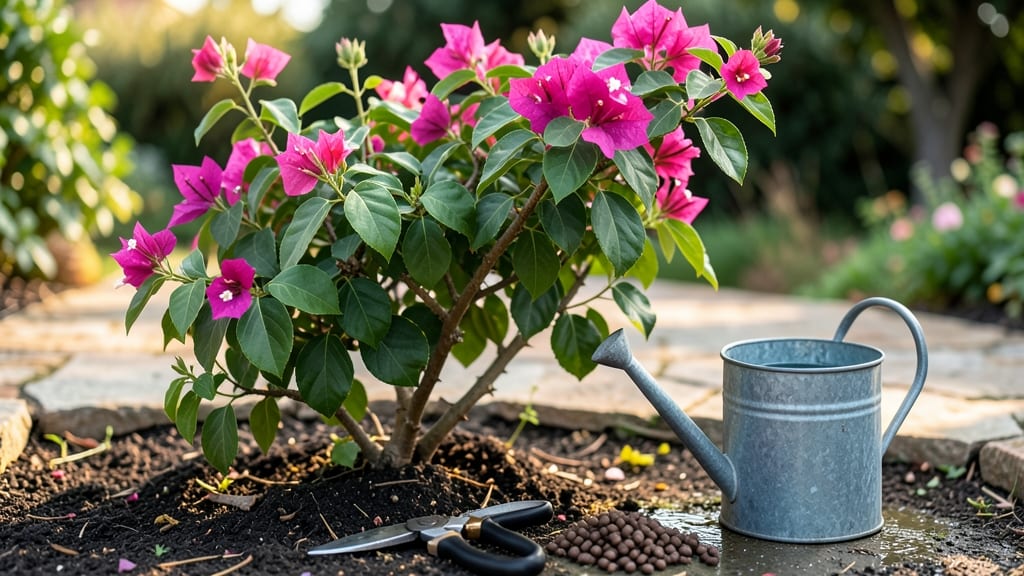
How to get your bougainvillea to flower more—it’s all about sunlight, pruning, and soil that doesn’t smother roots. Most gardeners miss one of these until their plants finally burst into color with those vibrant paper-like blooms. 🌿
Start by giving your bougainvillea at least 6 hours of direct sun daily—partial shade triggers leaf growth over flowers. Prune in late winter or early spring, cutting back one-third of the plant to encourage new growth where blooms form.
And skip the heavy fertilizer—bougainvilleas thrive on lean soil with occasional balanced feedings.
Within 4-6 weeks of proper care, you’ll see fresh pink, purple, or red blooms emerging from the new growth. The key is consistency: no overwatering (they hate soggy roots), no deep shade, and no skipping the annual prune. Even neglected plants can turn around with these adjustments.
This works for both container-grown and in-ground bougainvilleas, though potted plants need extra attention during summer heat. The first flush of flowers comes in spring, but with good care, you’ll get two to three blooming seasons per year. Let’s get those stems flowering!
📚 In This Guide
- What you need
- Instructions
- Tips and common mistakes
- Wrapping up and next steps
What you need
- ● Bougainvillea plant – Choose a healthy, mature plant (at least 1-2 years old for best results).
- ● Well-draining potting mix – A blend of cactus/succulent soil (60%), perlite or pumice (20%), and sand or grit (20%). Avoid heavy garden soil!
- ● Balanced, water-soluble fertilizer – Look for a 10-10-10 or 20-20-20 NPK ratio (or a bloom booster with phosphorus).
- ● Pruning shears or sharp bypass pruners – Sterilized to prevent disease (rubbing alcohol works!).
- ● Gloves – Bougainvillea thorns are no joke! Opt for gardening gloves with reinforced palms.
- ● Watering can with a rose attachment – Ensures gentle, targeted watering at the soil base.
- ● Container or garden space – For containers: Minimum 12-inch diameter (bigger = better for established plants).
- ● For ground planting: Full sun exposure (6+ hours/day) and slope or raised bed for drainage.
- ● Slow-release fertilizer granules – Mix into soil for steady nutrient release over 3-6 months.
- ● Mulch (gravel or bark) – Keeps roots cool and prevents soil compaction.
- ● pH testing kit – Aim for 6.0–7.0 pH (bougainvilleas love slightly acidic to neutral soil).
- ● Plant support (stakes or trellis) – Helps train vining varieties and improve airflow.
- ● Hose with adjustable nozzle – For deep watering during droughts.
- ○ Anti-thorn spray (optional) – If you’re extra sensitive to pricking!
Instructions for encouraging bougainvillea to bloom profusely
Here's my battle-tested approach to transform your bougainvillea from a leafy shrub into a flowering powerhouse.
☀️ Step 1: Maximize Sun Exposure Daily
Bougainvillea demands 6-8 hours of direct sunlight for optimal flowering. If your plant only gets partial sun, you'll struggle with blooms. I position mine in the southeast corner of my patio where it catches morning sun and avoids harsh afternoon heat. The key is bright, unfiltered light—even a sheer curtain reduces intensity enough to stunt flowers.
Watch for these signs: leaves turning yellow or stems stretching excessively mean your plant is starved for light. If you're growing indoors, supplement with a full-spectrum LED grow light positioned 12-18 inches away for 14 hours daily. Rotate the plant weekly to prevent lopsided growth toward the light source.
✂️ Step 2: Prune Strategically for Flowering Stimulation
Pruning isn't just about shaping—it's how you trigger more blooms. I cut back 1/3 of the plant's length right after the last frost or in early spring, just as new growth begins. Always prune just above a leaf node where two leaves meet the stem—this is where new branches will form. Avoid cutting into old wood as it won't regenerate.
Here's the trick: when you see new green growth after pruning, that's your signal to feed with a balanced 10-10-10 fertilizer. The plant needs energy to support both new stems and flower production. I make a habit of pinching back the tips of new shoots when they reach 6 inches—this encourages bushier growth and more flower clusters.
💧 Step 3: Master the Watering and Soil Balance
Bougainvillea thrives on well-draining soil and moderate moisture. Overwatering is the #1 killer of blooms—it causes root rot and stresses the plant. I water deeply every 5-7 days until water runs through the drainage holes, then let the top 2 inches of soil dry out completely before watering again. The soil should feel dry to touch at this depth.
For soil mix, I combine 60% cactus/succulent mix, 30% perlite, and 10% compost. This ensures excellent drainage while providing enough nutrients. You'll know your watering is right when leaves stay vibrant green and stems feel firm—not mushy or brittle. Yellowing leaves usually mean overwatering, while crispy edges signal underwatering.
🌿 Step 4: Feed with the Right Fertilizer Timing
The secret to continuous blooms is feeding at the right times. I use a low-nitrogen, high-phosphorus fertilizer (5-10-10 ratio) because phosphorus promotes flowering. Apply it every 4-6 weeks starting in early spring and continuing until mid-fall. Stop fertilizing in late fall to let the plant rest.
Here's what I've learned: bougainvillea responds best to liquid fertilizer applied to moist soil in the morning. I dilute it to half-strength to avoid burning roots. Watch for new flower buds forming at the tips of branches—this confirms your feeding schedule is working. If you see mostly leaves with no buds, increase the phosphorus ratio to 7-9-9 for the next feeding.
⏰ Step 5: Create Seasonal Stress for Continuous Blooms
Bougainvillea flowers in response to mild stress, not constant comfort. I create this by giving the plant slightly cooler nights (55-60°F) and drier conditions in late summer. This mimics its natural tropical habitat where seasonal changes trigger blooming cycles. In my climate, I move potted plants to a shadier spot for 2-3 weeks before the first frost.
The payoff comes when you see new flower spikes forming at the branch tips. This is your plant's way of saying "thank you" for the seasonal adjustment. For container-grown bougainvillea, I also reduce watering slightly in late summer—letting the soil dry out more between waterings encourages root activity and flower production.
Tips & tricks for encouraging bougainvillea blooms
These battle-tested insights will help you coax vibrant blooms from your bougainvillea—no guesswork required.
Light Intensity Matters: The 6-8 hours of direct sunlight in Step 1 isn't just about duration—it's about intensity. I've found that bougainvillea responds best to morning sun (before 10 AM) and late afternoon light (after 4 PM) when temperatures are cooler. If you notice your plant stretching toward the light source, it's begging for more intensity. For indoor growers, position your full-spectrum LED grow light 12-18 inches away and angle it to mimic natural sunlight patterns rather than shining directly overhead. The goal is to replicate the bright, tropical sunlight bougainvillea thrives on.
Pruning Precision: In Step 2, cutting back 1/3 of the plant's length might seem drastic, but this is where the magic happens for flower production. The key is to prune just as new growth begins—this triggers the plant's natural blooming response. I always sterilize my pruning shears with rubbing alcohol between cuts to prevent disease transmission. For container-grown bougainvillea, this strategic pruning also helps control size and shape while encouraging more compact, bushier growth that produces more flower clusters.
Soil Science: Your soil mix in Step 3 is doing double duty—it needs to drain water quickly while retaining just enough moisture. The 60-30-10 ratio of cactus mix, perlite, and compost creates the perfect balance. Pro tip: I add a handful of coarse sand to my mix for even better drainage. When checking soil moisture, stick your finger 2 inches deep—this is where the roots are actively growing. If you're repotting, choose containers with drainage holes that are at least 1/3 the diameter of the root ball to prevent waterlogging, which is bougainvillea's nemesis.
Stress Management: The seasonal stress in Step 5 is what triggers continuous blooming. In late summer, I move my potted bougainvillea to a spot with 55-60°F nighttime temperatures and reduce watering by 25%. This mimics the natural dry season in its tropical habitat. The plant responds by producing more flower buds in anticipation of cooler weather. Think of it as giving your bougainvillea a gentle nudge to "hurry up and bloom" before winter arrives.
Pro Tips for Get Bougainvillea To Flower More
- These battle-tested insights will help you coax vibrant blooms from your bougainvillea—no guesswork required.
- Light Intensity Matters: The 6-8 hours of direct sunlight in Step 1 isn't just about duration—it's about intensity.
- Pruning Precision: In Step 2, cutting back 1/3 of the plant's length might seem drastic, but this is where the magic happens for flower production.
Frequently asked questions
Got questions about coaxing more vibrant blooms from your bougainvillea? You’re not alone! Here are some of the most common questions—and answers—to help you troubleshoot and succeed.
Why isn’t my bougainvillea flowering at all?
Bougainvillea needs full sun (6+ hours daily) and well-draining soil to thrive. If it’s in shade or soggy soil, it’ll focus on leaves, not flowers. Also, check for over-fertilizing—too much nitrogen = fewer blooms. Try moving it to a sunnier spot and pruning old growth to encourage new, flower-producing branches.
How long does it take for bougainvillea to flower after pruning?
With proper care, you’ll see new blooms in 6–8 weeks after pruning. The key is timing: prune right after a flowering cycle (late winter/early spring) to stimulate fresh growth. Avoid heavy pruning in fall—it can delay spring blooms. Patience pays off, but consistent sunlight and watering will speed up the process!
Can I force bougainvillea to flower indoors?
Bougainvillea is a tropical outdoor plant and struggles indoors due to low light and humidity. However, if you have a sunny windowsill (south-facing) and a grow light, you might get sparse blooms. For best results, grow it outdoors in warm climates (zones 9–11) or overwinter it indoors and bring it back outside in spring.
What should I do if my bougainvillea’s leaves turn yellow?
Yellow leaves usually signal overwatering, poor drainage, or nutrient issues. Let the soil dry out between waterings, and ensure your pot has drainage holes. If the yellowing is paired with brown edges, it could be underwatering or salt buildup from tap water. Flush the soil with water and switch to distilled or rainwater if needed.
Does bougainvillea flower better in pots or in the ground?
Both work, but potted bougainvillea often flowers more reliably because you control soil quality and drainage. In-ground plants may struggle if the soil is too heavy or retains moisture. If planting in the ground, amend the soil with sand or perlite and choose a spot with excellent drainage. Pots also make it easier to move the plant for optimal sunlight!
Wrapping up and next steps
Getting your bougainvillea to burst into vibrant blooms is all about patience, consistency, and a little extra care! 🌺 With the right balance of sunlight, pruning, soil conditions, and seasonal adjustments, you’ll soon enjoy a stunning floral display.
Remember, bougainvilleas thrive when treated with love and attention—so don’t hesitate to experiment and tweak your approach until you find what works best for your plant.
Ready to see those blooms multiply? Start by applying just one or two tips from this guide this week—whether it’s adjusting sunlight exposure or giving it a light trim. Over time, your efforts will pay off with a show-stopping cascade of color! 🌟