
How To
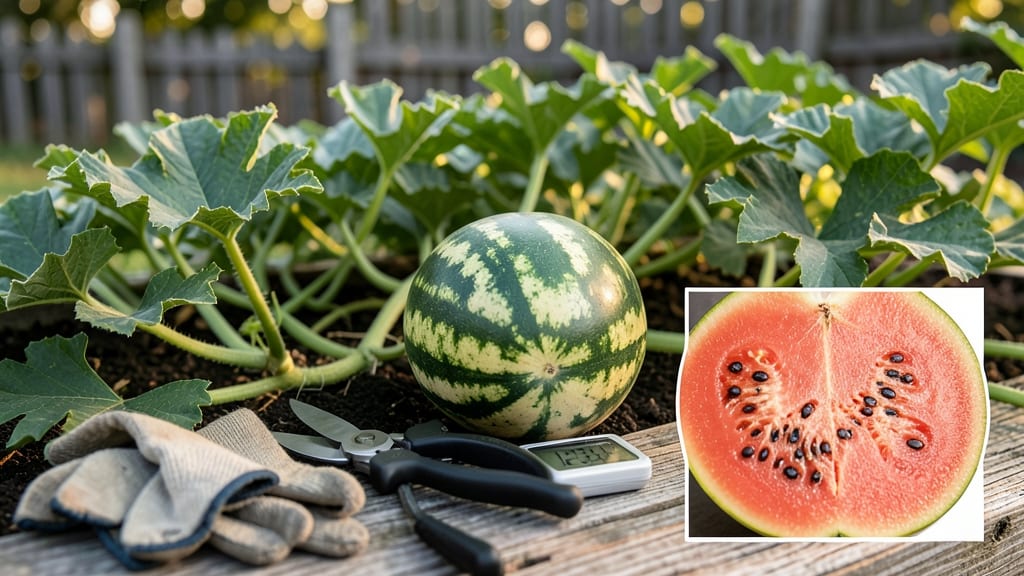
There’s nothing worse than slicing into a watermelon 🍉 only to find it’s still rock-hard or disappointingly bland—but how to know when to pick a watermelon from the garden is the #1 question gardeners ask.
The good news? With just a few simple tricks, you can tell when your watermelon is perfectly ripe, every single time.
Most gardeners focus on size or color alone, but those clues often lead to overripe (or underripe) fruit. Instead, I’ll show you the 5 foolproof signs to watch for—from the telltale "field spot" to the stem’s surprising transformation.
These tricks work for every variety, whether you’re growing seedless types or classic heirlooms.
Timing matters too: in Zone 6a, your harvest window runs from July to September, but waiting too long means tough rinds and less sweetness. I’ll break down exactly when to check your melons—plus what to do if you miss the boat. Ready to go from guesswork to garden-fresh perfection?
By the end, you’ll never second-guess your harvest again. Let’s dive into the secrets that’ll turn your watermelon patch into a sweet, juicy success—no more wasted fruit!
5 Visual and physical signs your watermelon is ripe for picking
Watermelons are finicky about timing—pick too soon, and you’ll end up with a meal of watery, seedy disappointment. But master these five foolproof ripeness indicators, and you’ll harvest melons bursting with sweet, juicy perfection every time. The key? Combine visual cues with physical tests for accuracy.
First, focus on the field spot—that creamy patch where the melon rested on the soil. When ripe, it shifts from white to yellowish or buttery, signaling sugar development inside.
This is your #1 clue that the fruit is ready. Ignoring it means risking underripe flesh, no matter how big the melon looks.
Look for a yellowish or buttery patch where the melon touched the ground. This indicates sugar maturation.
Striped varieties should have bold, consistent stripes. Solid melons turn fully dark green, yellow, or red (depending on type).
The small vine tendrils closest to the melon should turn brown and crispy. This means the plant is diverting energy to ripening.
Tap the melon with your knuckles. A deep, hollow thud means ripe; a high-pitched ping means underripe.
The stem end should turn yellow-brown and feel slightly woody. A green stem means wait at least 3 more days.
Next, check the rind texture. A ripe watermelon’s skin should feel thick and tough—you shouldn’t be able to puncture it with your thumbnail. If it gives way easily, the fruit needs more time.
Pro tip: Run your fingers over the stripes or netting; they’ll feel raised and crisp when ready.
Don’t overlook the stem end. When the main vine connecting the melon to the plant turns dry and brown, it’s a clear signal to harvest.
This happens because the plant stops sending nutrients to the fruit. If the stem is still green, wait 2–3 more days—patience here prevents bitter melons.
For a final check, perform the thump test (also called the "knock test"). Hold the melon with one hand and tap it firmly with the other. A deep, hollow thud confirms ripeness, while a sharp, high-pitched ping means it’s underripe.
This works because ripe melons have more internal moisture and sugar, which changes the sound.
Heat waves can trick gardeners into picking too early, so always combine these tests. A melon might pass one check but fail another—never rely on just size or vine color.
For example, a large melon with a pale rind is often overwatered and bland, while a small one with a creamy field spot could be a hidden gem.
Once you’ve confirmed ripeness, use a sharp knife or pruners to cut the stem, leaving a 1-inch stub. Avoid twisting or pulling—this can damage the vine and reduce next year’s yield. Store ripe watermelons in a cool, dry place (50–55°F) for up to 2 weeks to preserve sweetness.
Remember: The earlier you harvest, the longer the melon lasts off the vine. But if left too long, watermelons overripen quickly, turning mushy and losing flavor. Balance is key—check your melons every 2–3 days during peak season to catch that sweet spot.
🌱🍉
5 Visual and physical signs your watermelon is ripe for picking
Watermelons don’t ripen after picking, so timing is everything. Look for these 5 key signs to ensure you harvest at peak sweetness. The field spot (the cream-colored area where the melon rested on the ground) should turn creamy yellow—this indicates full ripeness.
Combine this with other clues for foolproof results.
Next, check the stem end. A ripe watermelon’s stem will turn brown or dry out, while a green stem means it’s not ready. This change signals the melon has stopped growing and is ready to pick.
Pair this with the thump test—a hollow, deep sound means juicy flesh inside.
Don’t overlook the tendrils near the stem. When they turn brown and crispy, it’s another sign of ripeness. These tendrils act like a natural timer, drying out as the melon matures. For extra precision, use a thermometer—ripe watermelons reach 86°F internal temperature.
Finally, inspect the size and shape. While not foolproof, a watermelon that’s reached its full expected size (6–12 inches in diameter) and has a smooth, symmetrical shape is more likely to be ripe. Combine all these signs for the best chance at a sweet, juicy harvest.
Pro tip: Mark the harvest date on your calendar once you spot these signs. Watermelons left too long on the vine can become overripe or attract pests, so act quickly once they’re ready. 🍉