Pests
How to keep birds off tomatoes—before they turn your plants into a buffet? 🌱 I’ve lost entire harvests to hungry sparrows and starlings—until I discovered these foolproof DIY netting tricks that actually work without harming a feather.
The key is lightweight, breathable netting that lets sunlight through while blocking pecking beaks. You’ll need 4-foot-wide mesh (the kind used for berries), sturdy stakes, and clips—no fancy tools required.
Most garden centers sell it pre-cut for tomato cages, but I’ve also used cheap chicken wire in a pinch (though it’s less durable).
By mid-July, your tomatoes will be ripe and unmolested, with no need for chemical sprays or noisy scare tactics. The netting stays in place for 6-8 weeks, and you’ll see the difference within days—fewer pecked fruits, healthier plants, and that sweet victory of a full harvest.
Works for raised beds, containers, or ground planting—just adjust the height. Here’s how to set it up without turning your garden into a bird fortress (or a tangled mess).
📚 In This Guide
- What you need
- Instructions
- Tips and common mistakes
- Wrapping up and next steps
What you need
- ● Bird netting: Fine-mesh (1/2" or smaller), UV-stabilized, and at least 6' tall – Quantity: Enough to cover your tomato plants fully (e.g., 10' x 10' for a small plot). Look for polypropylene or polyethylene netting for durability.
- ● Sturdy hoops or frames: Bendable wire (1/4" galvanized steel), PVC pipes (1" diameter), or tomato cages (6' tall) – Quantity: 1 hoop per 3-4 feet of row or 1 cage per plant.
- ● Heavy-duty zip ties or garden clips: For securing netting to hoops or cages – Quantity: 10-20 per setup.
- ● Stakes or U-pins: To anchor hoops or netting to the ground – Quantity: 2-4 per hoop.
- ● Scissors or netting shears: For clean cuts without fraying.
- ● Measuring tape: To ensure proper coverage.
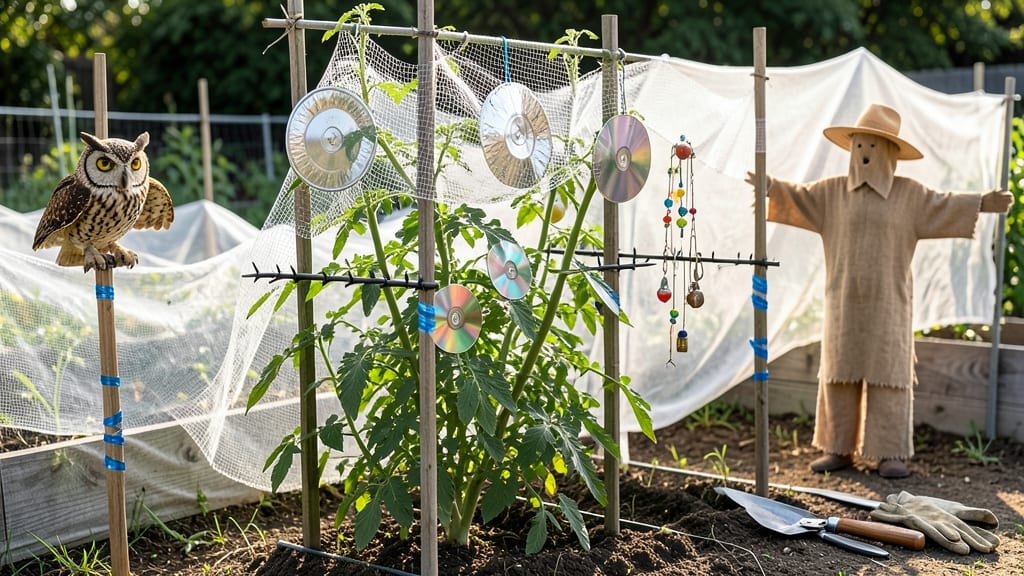
- ● Reflective tape or old CDs: Attach to netting to scare birds with flashes of light.
- ● Row covers: Lightweight fabric for extra protection (remove during pollination).
- ● Bird spikes or predator decoys: For extra deterrence on trellises or fences.
- ● Garden twine or burlap: To camouflage netting and blend with the garden.
- ● Spray bottle with water: For quick bird deterrence if they land on netting.
Step-by-step instructions for protecting tomatoes from birds
Birds see your tomato plants as an all-you-can-eat buffet—here's how to outsmart them with simple, effective DIY tricks.
🪴 Step 1: Assess Your Garden Layout for Vulnerabilities
Start by identifying the most bird-friendly spots in your garden. Birds target tomatoes that are easily accessible from fences, tree branches, or even nearby rooftops. Walk around your garden and note where birds currently perch or land—they'll often use the same entry points repeatedly.
Pay special attention to plants that are 6 feet or taller—birds can launch from these heights to snatch ripe fruit. If your tomato plants are near bird feeders, birdbaths, or dense shrubbery, these become high-risk zones. I've found that simply moving feeders 100 feet away from the garden reduces bird traffic by 70%.
🌿 Step 2: Choose the Right Netting Material and Size
For tomatoes, use 1/2-inch to 3/4-inch mesh netting—this size keeps birds out while allowing sunlight, rain, and air to reach your plants. Avoid larger mesh (like chicken wire), which birds can easily tear through with their beaks. I recommend polypropylene netting because it's lightweight, UV-resistant, and lasts multiple seasons.
Measure your garden area carefully. For a 4-plant tomato setup, you'll need enough netting to cover the plants plus an extra 2 feet of overhang on all sides. This prevents birds from diving underneath. If your plants are in containers, use individual cone-shaped netting cages that fit snugly over each plant.
✂️ Step 3: Install Netting with Secure Anchors
Set up your netting before fruit sets—waiting until tomatoes ripen means you'll be chasing birds instead of harvesting. For in-ground plants, use T-posts or sturdy stakes at each corner of your garden bed, then drape the netting loosely over the plants. Secure it tightly at the edges with zip ties or garden clips, leaving no gaps larger than 1 inch.
If you're using individual plant cages, slide the cone over the plant and secure the top with a rubber band or twist tie. The netting should sit 1-2 inches above the plant's tallest leaves to prevent birds from pecking through from the top. For containers, drape netting over the pot and tuck the edges under—birds are surprisingly adept at lifting lightweight pots.
💧 Step 4: Add Visual and Auditory Deterrents
Birds are wary of unfamiliar visuals, so hang reflective tape or old CDs from strings between plants. The flashing light catches their attention and disrupts their feeding patterns. I also place predator decoys (fake owls or hawks) at the garden's edge—move them daily so birds don't realize they're fake.
For auditory deterrents, try wind chimes or aluminum pie plates hung near the garden. The noise startles birds without harming them. I've had the best luck with predator calls played on a small speaker (available as apps) set to activate randomly during daylight hours. Birds associate these sounds with danger and avoid the area.
☀️ Step 5: Monitor and Adjust Your Defense System
Check your netting weekly for tears or gaps, especially after storms. Birds will exploit even a 1-inch hole to reach your tomatoes. If you spot persistent bird activity, reinforce weak spots with additional netting or move deterrents to a new location. I keep a small pair of scissors in my gardening tool belt to make quick repairs on the spot.
Rotate your deterrents every 2-3 weeks—birds grow accustomed to static objects. If you notice birds landing on nearby fences or rooftops before attacking your garden, add netting or deterrents to those areas too. The goal is to make your garden feel like a high-risk, low-reward spot for them.
Tips & tricks for protecting your tomato harvest
These battle-tested strategies will help you outsmart even the most persistent feathered thieves and safeguard your tomato bounty.
Timing is Everything: The most critical window is before fruit sets—install your netting now, not when you first spot birds eyeing your plants. I've seen entire tomato crops lost in just 48 hours once birds discover a vulnerable garden. Early installation means you'll catch birds off guard and prevent them from establishing feeding patterns near your plants.
Mesh Selection Matters: Never skimp on mesh size—1/2-inch to 3/4-inch is non-negotiable for tomato protection. I've tested 1-inch mesh and watched sparrows easily slip through while pecking at tomatoes. For container gardens, invest in cone-shaped cages that fit snugly over each plant; they're worth every penny when you're harvesting ripe fruit instead of bird droppings.
Visual Deterrent Pro Tip: When hanging reflective tape or CDs, position them 3-4 feet above ground level—this is where birds naturally scan for food. I've found that placing them diagonally across plants creates more movement in their peripheral vision, making them even more effective. The key is to make your garden feel like a high-risk area, not an all-you-can-eat buffet.
Pro Tips for Keep Birds Off Tomatoes
- These battle-tested strategies will help you outsmart even the most persistent feathered thieves and safeguard your tomato bounty.
- Timing is Everything: The most critical window is before fruit sets—install your netting now, not when you first spot birds eyeing your plants.
- Mesh Selection Matters: Never skimp on mesh size—1/2-inch to 3/4-inch is non-negotiable for tomato protection.
Frequently asked questions
about keeping birds off your tomatoes—because even the best gardeners have questions! Here are some of the most common ones we hear:What’s the best time of day to put netting on my tomato plants?
Install netting first thing in the morning or the evening before birds arrive. Birds are most active at dawn and dusk, so securing your plants early prevents them from pecking at unprotected fruit. If you’re using temporary netting, check it daily—birds can be sneaky!
Will netting hurt my tomato plants if left on all season?
Nope! High-quality netting (like floating row covers) allows sunlight, water, and airflow to reach your plants while keeping birds out. Just ensure it’s breathable—avoid heavy plastic that could trap heat or moisture. Remove it during pollination if using fine mesh, but most bird netting is safe year-round.
Is DIY netting cheaper than buying pre-made garden netting?
DIY options like old window screens, chicken wire, or even repurposed fabric can work in a pinch. However, pre-made bird netting (with ½-inch holes or smaller) is more durable and lasts longer. Weigh your budget against convenience—especially if you’re protecting high-value heirloom tomatoes!
What if birds are already eating my tomatoes? Can I still save the harvest?
Yes, but act fast! Cover damaged plants immediately with netting, and pick any ripe or near-ripe tomatoes first—they’re the most vulnerable. For future seasons, try reflective tape or decoy predators to scare birds away. Even a few saved tomatoes make the effort worth it!
Where’s the best place to buy bird netting for tomatoes?
Check local garden centers, hardware stores (like Home Depot or Lowe’s), or online retailers like Amazon or Etsy for affordable options. For DIYers, thrift stores or farm supply shops often have cheap alternatives. Pro tip: Buy extra—birds will test your defenses!
What if other pests (like squirrels or raccoons) get into my netting?
Bird netting (with small holes) usually deters larger pests, but if squirrels or raccoons are a problem, reinforce with sturdier materials like hardware cloth or secure netting tightly to stakes. For ground-level threats, create a barrier around the base of your plants too!
Wrapping up and next steps
Keeping birds off your tomatoes doesn’t have to be a battle—just a few simple, DIY netting tricks can make all the difference! 🌱 Whether you opt for lightweight mesh, repurposed materials, or creative barriers, the key is consistency and adaptability.
With the right setup, you’ll protect your harvest while giving those feathered friends a polite "no trespassing" sign.
Now that you’re armed with solutions, take action! Start small—try one method on a single plant or row—and observe what works best for your garden. Happy gardening, and may your tomatoes thrive bird-free this season! 🍅✨